

Introduction
Starting Muay Thai for the first time can feel intimidating, especially if you’ve never trained in martial arts or combat sports before.
Most beginners arrive with similar concerns: not being fit enough, not knowing the techniques, or worrying about slowing others down. In reality, beginner classes are designed exactly for that stage.
If you’re in Ubud and thinking about trying Muay Thai, your first class is not about performance. It’s about understanding the structure, the pace, and how your body responds to a new type of training.
Arriving at the Gym
When you arrive, you’ll notice that everyone is already focused on their own training. Some are warming up, others are stretching or preparing their hands. There isn’t a moment when attention shifts toward you. That reduces pressure immediately.
At Ubud Muay Thai, beginners are guided into the session without being separated from the group. A trainer will usually show you where to start and explain how the class flows.
You’re not expected to know anything yet. The first session is about getting familiar with the environment.
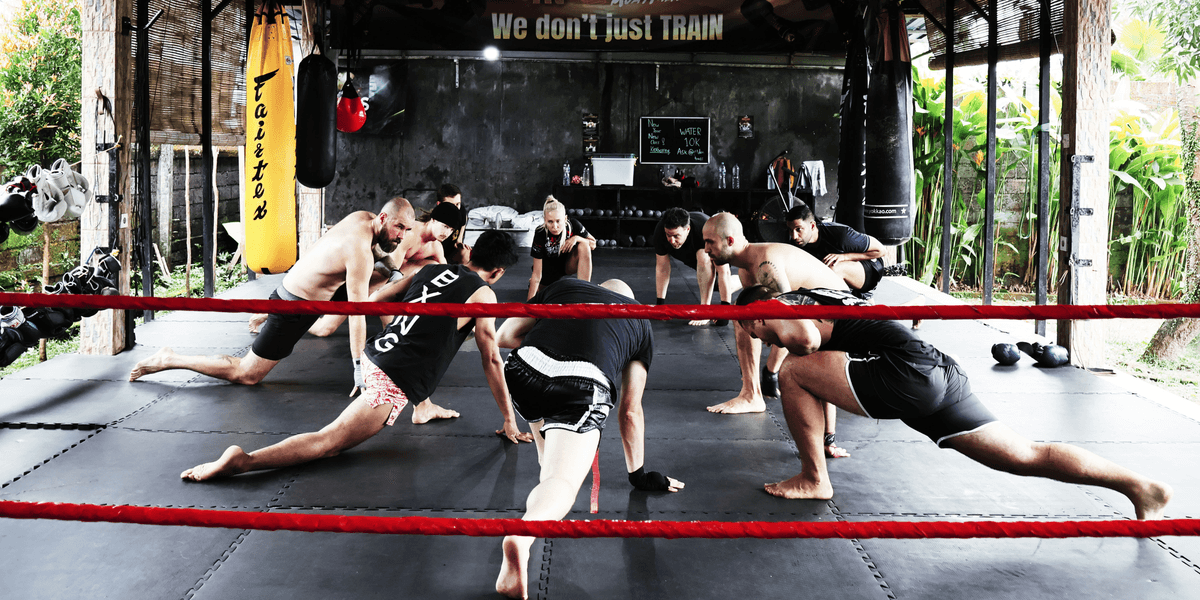
Warm-Up: Adjusting to the Movement
The class begins with a warm-up, which can include skipping rope, light movement drills, shadowboxing, and mobility work.
For beginners, this is often where expectations shift. Muay Thai engages the entire body, so even simple movements can feel more demanding than a typical gym workout.
This is also where many people realize they don’t need to prepare beforehand. Training itself builds the foundation.
If you’re wondering whether your current fitness level is enough, this is explained clearly here. Consistency matters more than starting conditions.
Learning the Basics
After warming up, the session shifts into technique.
You’ll be introduced to:
- stance and balance
- basic punches such as the jab and cross
- simple kicks
- how to hold your guard
This part of the class is slower and structured. Trainers demonstrate each movement and guide you step by step.
There is no expectation to get everything right immediately. The focus is on building coordination and awareness.
If you want a clearer picture of how beginner training is structured, this article explains it well.
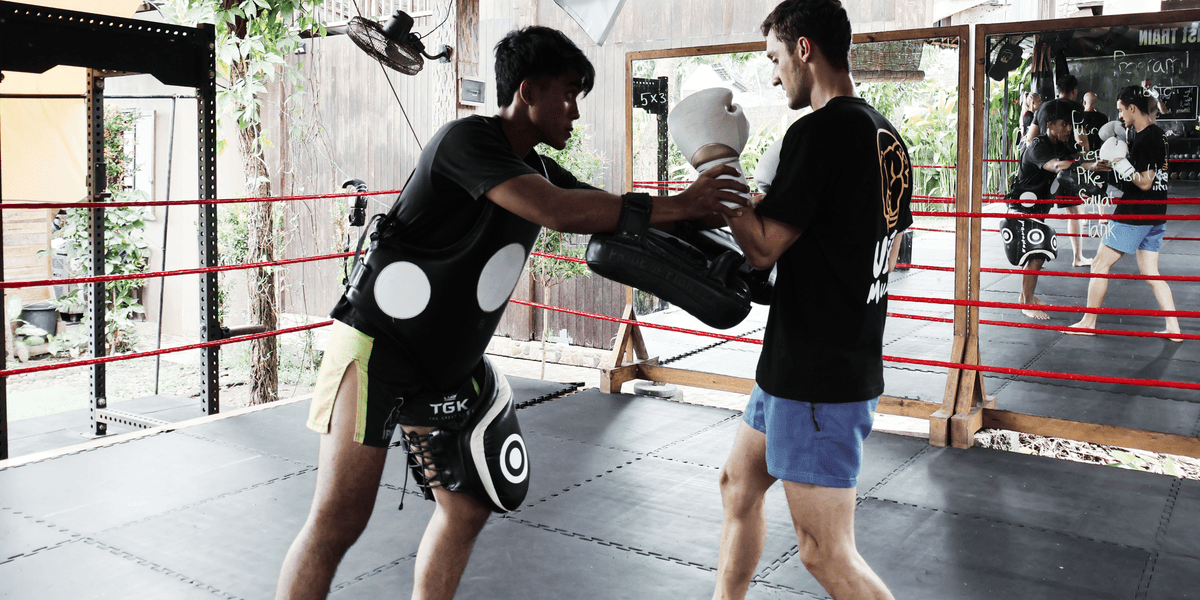
Pad Work: Applying the Techniques
Pad work is where the session becomes more dynamic.
You will work directly with a trainer who holds pads while you practice combinations. This setup allows you to learn timing, distance, and control in a guided and structured way.
For beginners, this is often the first moment when training feels more real. You’re no longer just learning movements, you’re applying them.
It may feel uncoordinated at first, and that’s expected. The focus is not on power, but on understanding how movements connect and improving gradually with guidance.
Conditioning and Endurance
Most sessions include a short conditioning segment at the end. This can involve bodyweight exercises such as push-ups, core work, or simple endurance drills.
You are not expected to match anyone else’s pace. Beginners are encouraged to work within their own capacity.
Over time, this is where improvements become noticeable, especially in stamina and overall strength.
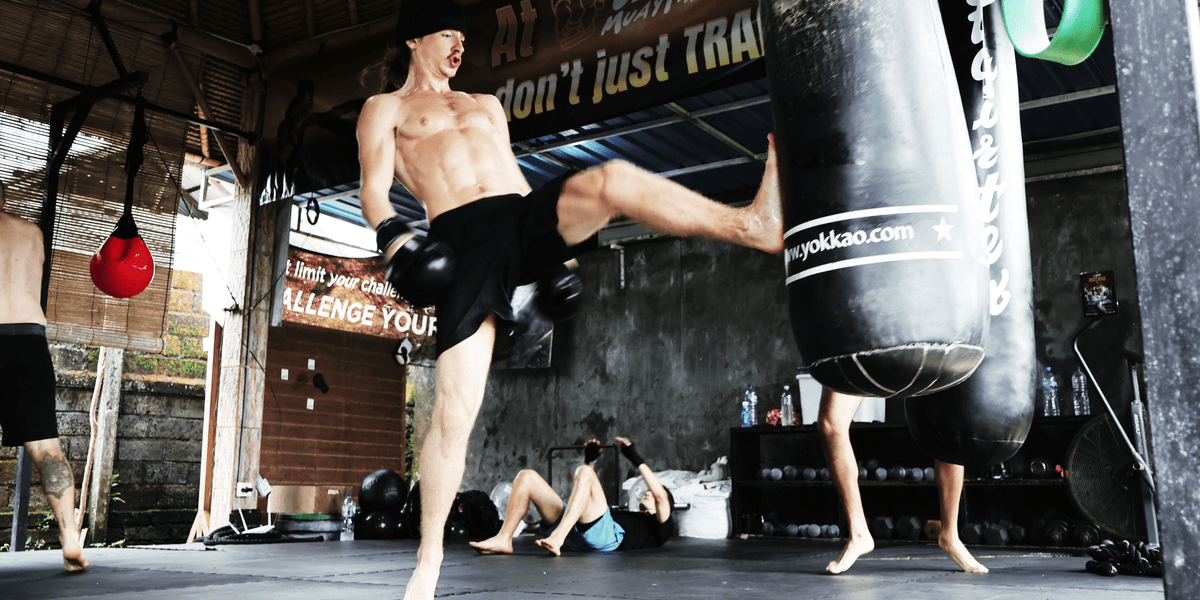
Do You Need to Spar?
A common concern for beginners is sparring.
In beginner classes, sparring is not required. It is usually introduced later, once you have developed basic technique and control.
Your first sessions are focused on learning, not fighting.
The Training Environment in Ubud
Training in Ubud offers a different atmosphere compared to many urban gyms.
Spaces are often open or semi-outdoor, which makes the experience feel less intense while still being physically engaging.
You’ll also find a mix of people in the same class:
- beginners
- regular members
- travelers
- experienced practitioners
This makes it easier to join without feeling out of place.
What to Bring to Your First Class
You don’t need much to get started.
Bring:
- comfortable workout clothes
- a water bottle
- a towel
Most equipment is already available at the gym. Hand wraps, shin guards, and head guards (if needed, usually for sparring classes) are provided, and gloves can be rented, so you don’t need to invest in gear immediately.
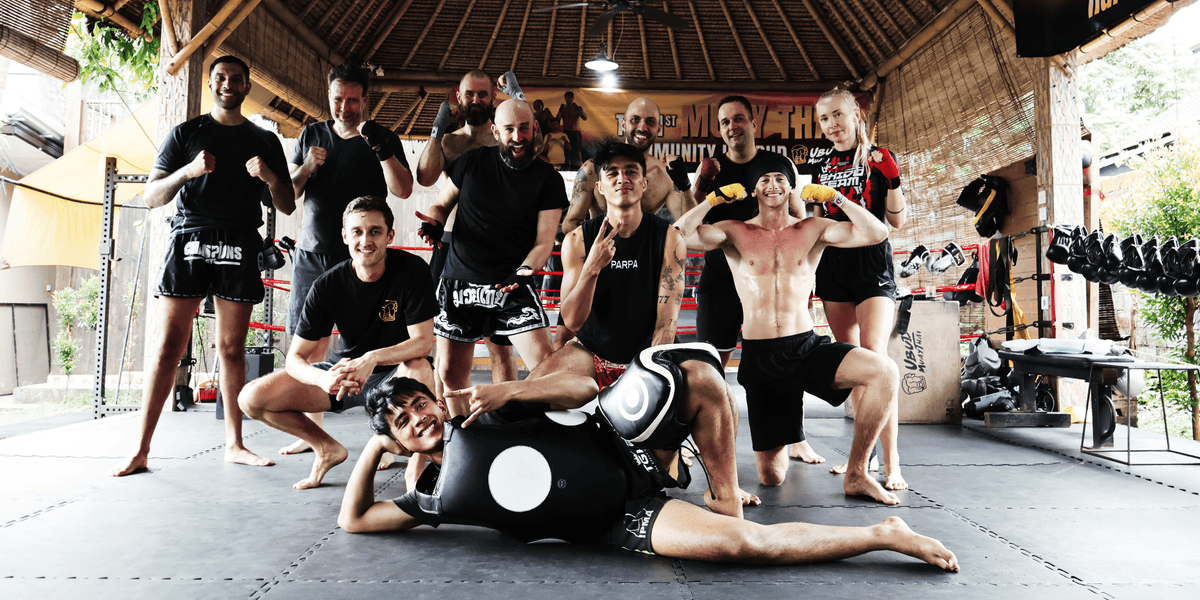
Planning Your First Session
If you’re ready to try, the best way to start is by understanding how classes are structured and choosing a time that fits your routine.