

Bali doesn't have a true off-season for training, but the island's weather does shape the experience considerably. Here's how to think about timing your trip around Bali's climate, crowds, and what actually makes for the best training conditions.
Understanding Bali's Two Seasons
Bali has a tropical climate with two broad seasons rather than four: a dry season from roughly April through October, and a wet season from November through March. This isn't a strict on-off switch — rain can still show up during the dry months, and the wet season has plenty of sunny days between downpours — but the general pattern holds consistently enough to plan around.
The dry season brings lower humidity, more consistent sunshine, and generally more comfortable conditions for intense outdoor or semi-outdoor training. The wet season brings higher humidity and regular afternoon rain showers, though these tend to arrive predictably and clear relatively quickly rather than persisting for entire days. Neither season makes training impossible — Muay Thai gyms across Bali operate year-round regardless of season — but the physical experience of training does shift noticeably between the two.
Temperatures themselves stay relatively consistent across both seasons, typically ranging from the high 20s to low 30s Celsius year-round, since Bali's tropical climate doesn't produce the dramatic seasonal temperature swings found in temperate regions. What changes most between seasons is humidity and rainfall rather than raw heat, which is why the training experience shifts more in terms of sweat and recovery than in terms of how hot the air actually feels on a given day.
Training During the Dry Season
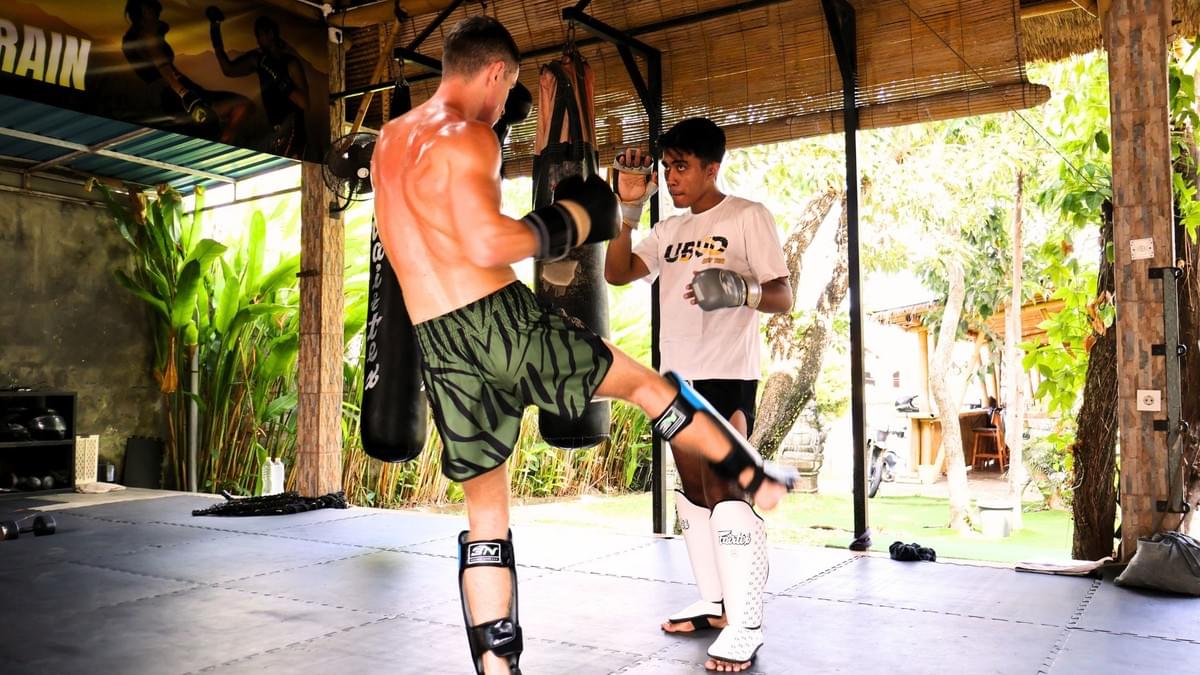
For many visitors, the dry season represents the more comfortable window for intensive training, particularly for those planning to train multiple sessions a day or attend a training camp. Lower humidity means sweat evaporates more efficiently, which makes temperature regulation during hard rounds noticeably easier than in the muggier wet season months. Clearer skies also mean more consistent conditions for any training that happens outdoors or in open-air gym spaces, which many Bali gyms feature given the island's climate.
This is also peak tourist season across Bali, which comes with trade-offs worth knowing about. Gyms tend to see higher visitor numbers during dry season months, meaning classes may run fuller and accommodation or camp packages may book out further in advance than during quieter periods. Anyone planning a trip specifically around an intensive training block during peak dry season months should factor in booking earlier rather than assuming availability will still be open closer to their travel dates.
Training During the Wet Season
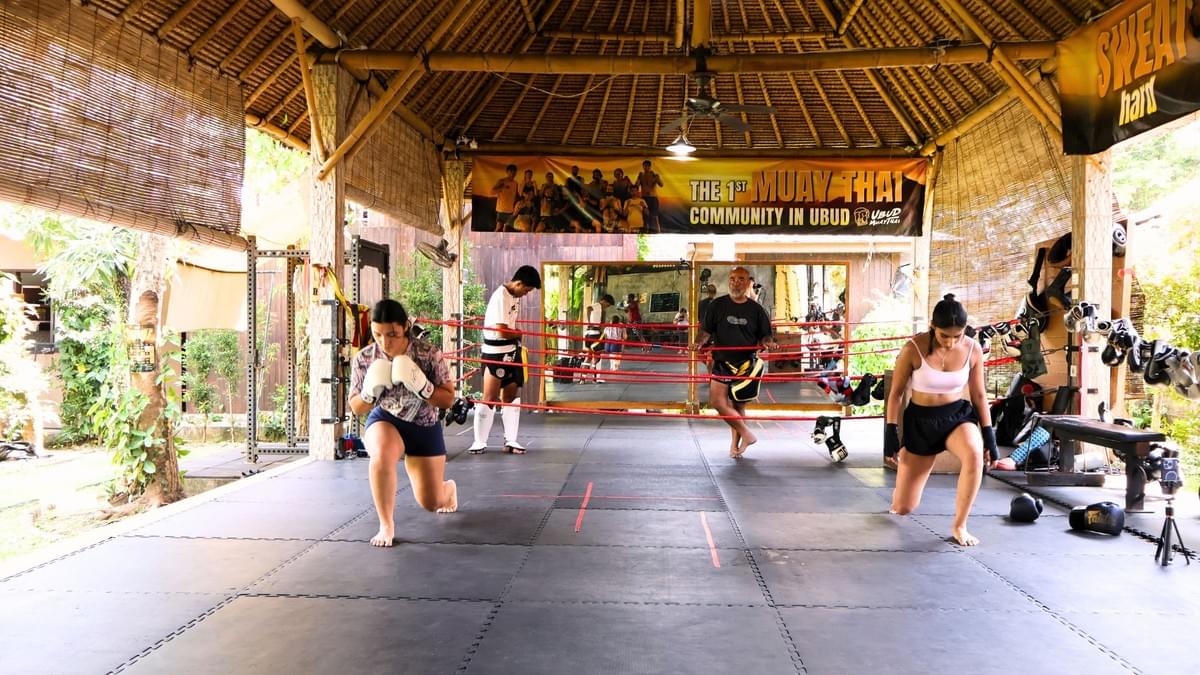
The wet season gets an unfair reputation as a worse time to train, but for many visitors it's actually a smart window to consider. Rain in Bali during these months tends to fall in concentrated afternoon or evening bursts rather than all-day downpours, which means mornings are frequently clear and comfortable for training even during the heart of the wet season. Many experienced visitors specifically time trips for the wet season to take advantage of quieter gyms, more flexible scheduling, and generally better availability for accommodation and camp packages.
Humidity does tend to run higher during these months, which affects recovery and hydration needs more than it affects the ability to train itself. Students visiting during the wet season should expect to drink more water between rounds and pay closer attention to electrolyte replacement than they might during the drier, more temperate months, simply because the body works harder to cool itself in higher ambient humidity.
Heat and Humidity Acclimatization
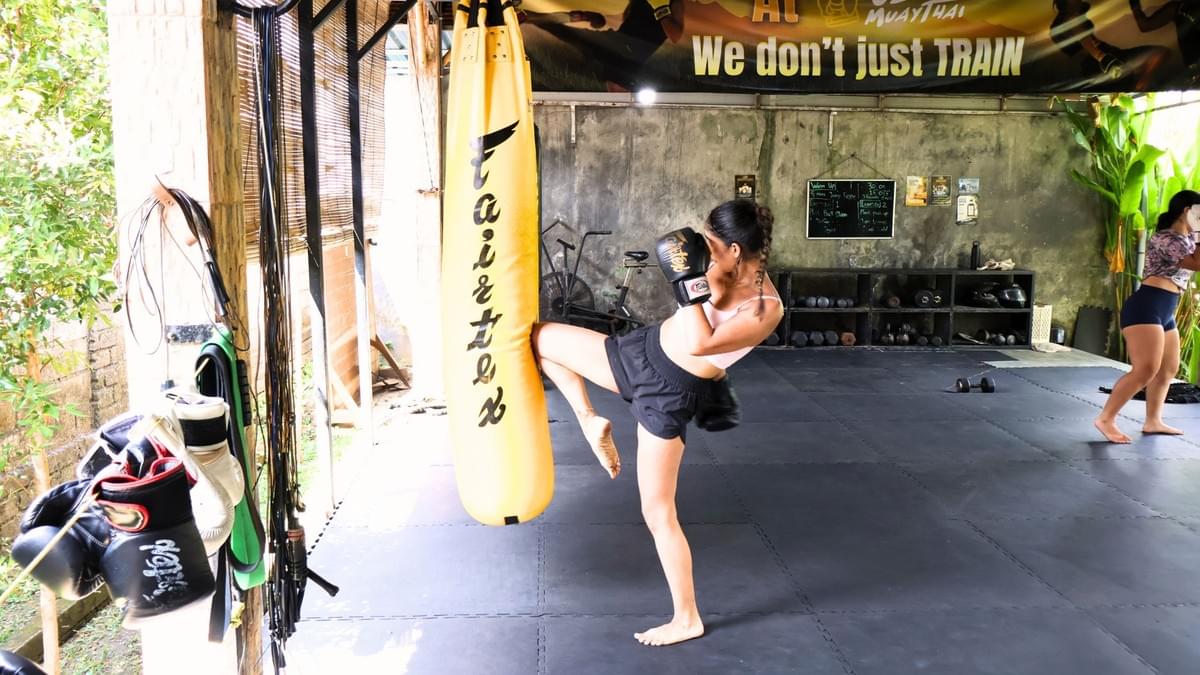
Regardless of which season you choose, adjusting to Bali's climate takes most visitors several days to a couple of weeks, particularly for anyone arriving from a cooler or drier climate. Training at full intensity immediately upon arrival, before the body has adapted to the heat and humidity, is one of the more common reasons visiting students feel unexpectedly gassed during their first few sessions despite being reasonably fit at home.
Building in a lighter first few days — shorter sessions, more deliberate pacing, extra attention to hydration — gives the body time to acclimatize before pushing into full-intensity training. This matters most for anyone planning a short, intensive camp stay, since arriving depleted from travel and then immediately training at full output in unfamiliar heat is a fast route to feeling worse than the training itself should actually produce.
Jet lag compounds this adjustment period for travelers arriving from far outside Southeast Asia's time zone. Combining jet lag recovery with heat acclimatization in the same first few days is genuinely demanding on the body, which is another reason easing into training intensity during the first week of a trip tends to pay off later in the stay rather than trying to push hard immediately and needing extra recovery time afterward.
Considering Bali's Cultural Calendar
Bali's cultural and religious calendar is worth factoring into travel timing as well, separate from weather considerations entirely. Nyepi, the Balinese Day of Silence, typically falls in March and involves the entire island observing a day of complete stillness — no travel, no lights, no activity of any kind, including training. Anyone planning a trip around this period should account for a full day where gyms, transportation, and most services across the island pause entirely.
Other ceremonial periods, particularly Galungan and Kuningan, occur throughout the year based on the Balinese calendar and can bring temporary schedule adjustments at some gyms as trainers and staff participate in local ceremonies. These adjustments tend to be minor and gym-specific rather than island-wide closures, but checking a gym's schedule directly around these dates is a reasonable step for anyone planning a trip tightly around specific training days.
Matching Season to Your Training Goals
The right season ultimately depends more on your specific goals than on weather alone. Travelers wanting the most predictable, comfortable conditions for an intensive training block — particularly first-time visitors adjusting to tropical training for the first time — often find the dry season the more forgiving choice. Those prioritizing quieter gyms, more flexible scheduling, and better availability, and who don't mind adapting training timing around predictable afternoon rain, frequently find the wet season just as productive without the peak-season crowds.
Budget-conscious travelers often lean toward the wet season for reasons beyond gym availability, too. Accommodation across Bali generally runs cheaper outside peak dry season months, and that saving can be substantial for anyone planning a longer training stay where accommodation costs add up over weeks rather than days. Combined with quieter gyms and more flexible booking for private sessions or camp packages, the wet season frequently offers better overall value for students without a strict preference for guaranteed sunshine every day.
Neither season is a wrong choice for serious training. Gyms across Bali run full class schedules and camp programs year-round, and the fundamentals that actually drive progress — consistency, trainer feedback, and time on the mat — matter far more than which season you happen to train in. Weather shapes comfort and logistics more than it shapes actual training quality.
Planning Your Trip Around Training
For anyone building a trip specifically around Muay Thai training, working backward from your training goals rather than purely from weather preferences tends to produce a better outcome. A short, intensive camp stay benefits from the more predictable conditions of dry season months, while a longer stay that blends training with daily life in Bali has more flexibility to work around wet season rain without much disruption to overall progress.
Whichever season fits your plans, arriving with realistic expectations about heat, humidity, and the adjustment period that comes with training in a tropical climate will serve you better than assuming your home-climate fitness translates directly on day one. Building in that adjustment window, staying disciplined about hydration, and pacing the first few sessions appropriately matters more to a successful trip than the specific month on the calendar.
If you're planning a training trip to Bali and want help figuring out timing around the schedule, you can check current class times and get in touch to plan your visit around what works best for your goals.