
Few lightweights in the world strike like Regian “The Immortal” Eersel. Tall, relentless, and dangerous with his knees, he has built a career on smart pressure and five-round cardio. Here’s what makes his style work and what you can borrow for your own game.
Who Is Regian Eersel?
Regian Eersel is a Surinamese-Dutch striker who competes in ONE Championship’s lightweight division. Nicknamed “The Immortal,” he stands 6'2" (189 cm), trains at Sityodtong Amsterdam, and holds a 15–1 record in ONE, with five wins by knockout. He has won ONE World Titles in both lightweight kickboxing and Muay Thai.
Born in Suriname, Eersel moved to Amsterdam with his family at the age of four and started taekwondo at eight. That background still shows in his kicking and in the athletic knees that have become his trademark.
He first won the ONE Lightweight Kickboxing World Title in 2019 and added the ONE Lightweight Muay Thai World Title in 2022, becoming a two-sport world champion. In 2026, he reclaimed the vacant lightweight kickboxing title against Rungrawee Sitsongpeenong, and in October, he stopped George Jarvis for the second time with a fourth-round knockout.
What Makes Regian Eersel’s Fighting Style Effective?
Eersel’s style works because he combines reach, volume, and patience. He reads opponents early, then steadily raises the pressure with long, varied combinations that often finish with a knee or kick. He changes rhythm mid-combination, keeps opponents guessing, and gets stronger as the fight goes on.
His approach is often described as Dutch-style kickboxing: punches flowing into low kicks, combinations of five strikes or more, and constant forward movement. What sets him apart is how well he blends that volume with timing. He does not just throw a lot. He throws a lot at the right moments.
If you enjoyed our breakdown of how to fight like Terence Crawford, Eersel is a useful contrast. Crawford wins with adjustments and counters. Eersel wins with structure, pressure, and relentless output.
How Do Tall Fighters Like Eersel Use Their Reach?
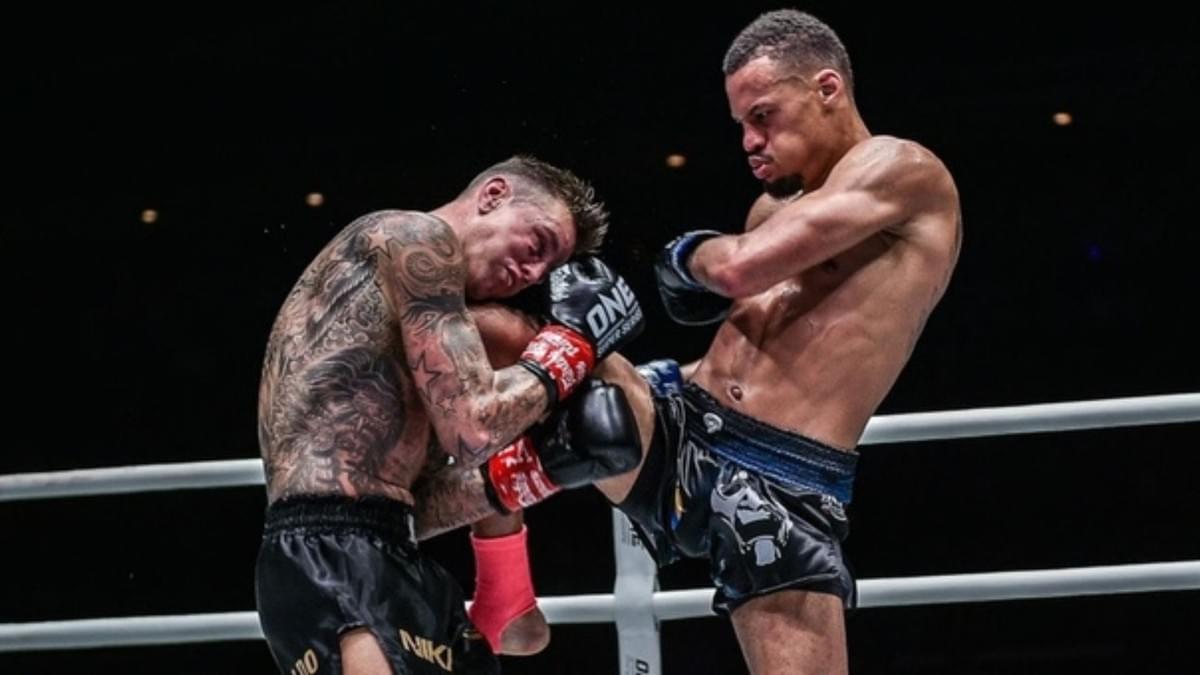
Tall fighters use reach to control distance, landing strikes before shorter opponents can get close. Eersel stands tall with a high guard, often bladed behind his right shoulder, and uses a stiff jab and front kick to keep opponents at range. When they crowd him, he frames with his lead hand and steps into knees.
His height also makes knees to the head and body easier to land. A shorter opponent who ducks in to close the gap often finds their head right in the path of his knee.
From the other side of the ring, this shows why fighting a taller opponent requires a plan. Our guide on how to fight a taller opponent in Muay Thai explains how shorter fighters can close distance safely, which is exactly the problem Eersel’s opponents struggle to solve.
How Does Eersel Set Up His Attacks?
Eersel’s main setup is the jab followed by an inside low kick. The jab draws the opponent’s attention upward while the kick attacks their lead leg. He also steps out to his left with his right straight, which opens angles for a left kick or left knee and keeps him circling safely away from counters.
The jab to inside low kick is simple, but it does a lot of work. It breaks balance, slows aggressive opponents, and builds damage over five rounds. When opponents press forward, he kicks the lead leg out from under them to reset the distance.
His right hand is also a launch point for kicks. Stepping wide on the straight opens his hips for a right high kick, which is a reminder that kicks land more often when they are set up. Our step-by-step guide to throwing a powerful roundhouse kick covers the mechanics behind that strike and why most head kicks miss explains why setups matter so much.

Why Are Knees Eersel’s Most Dangerous Weapon?
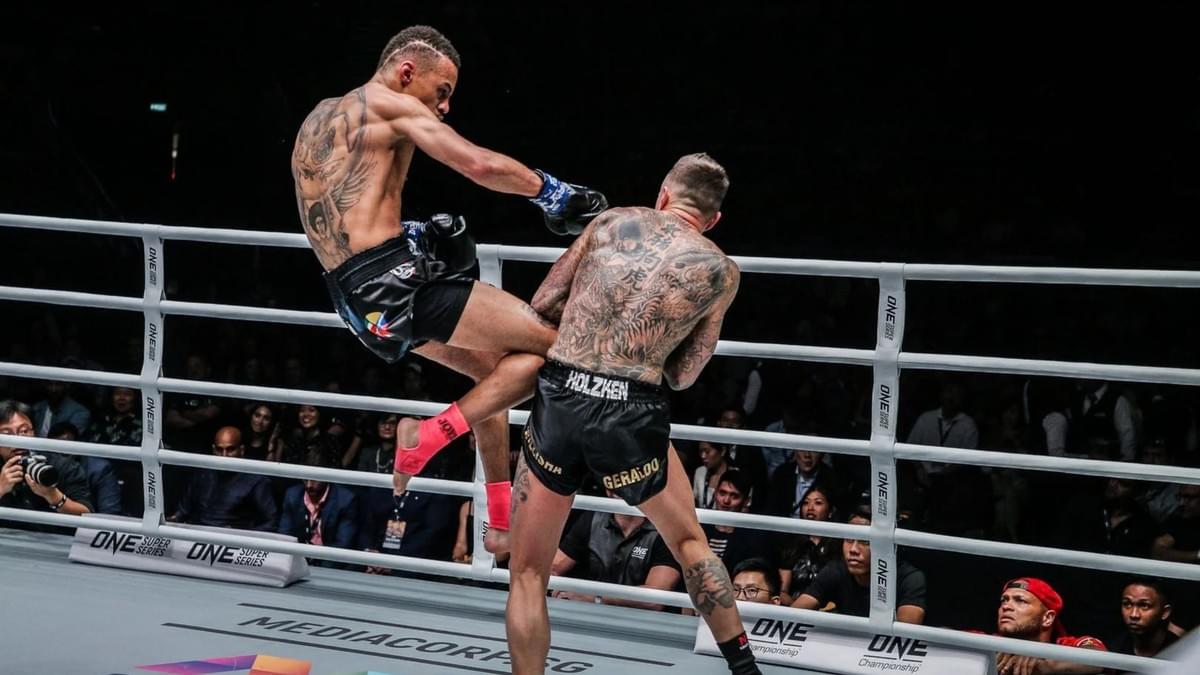
Knees are Eersel’s signature weapon because his height and timing let him land them from range, in exchanges, and even off the ropes. He looks for a knee nearly every round, targeting both the head and body, and can throw them stepping, standing, or flying. His body knees are especially effective at wearing opponents down.
One of his smartest habits is catching opponents’ elbows as they lift away from the ribs during punching flurries, then driving a knee into the opening. He also throws counter knees as opponents bounce off the ropes, turning a defensive position into an attacking one.
His flying knee is usually aimed at the ribs rather than the head, thrown mid-exchange when opponents least expect it.
How Does Eersel Attack the Body?
Eersel attacks the body with left hooks to the liver, uppercuts, and knees. One of his favorite combinations is a left hook to the liver, a right uppercut to stand the opponent up, then a left knee to the body. Body work drains opponents’ energy and sets up later finishes.
Body shots are easy to overlook because they rarely end fights right away. But they add up. An opponent who has absorbed hooks and knees to the midsection for three rounds moves slower, breathes harder, and drops their guard more often in rounds four and five.
Knockout power is not only about one huge punch to the chin. It is about accumulation, placement, and timing. Our guide on how to get knockout power explains how technique and body mechanics create real power.
How Does Eersel Pace Five-Round Fights?
Eersel manages his output early and raises it as opponents tire. He has gone the full championship distance many times in ONE and tends to look stronger in the later rounds than in the first. His conditioning lets him keep pressure on until the final bell instead of fading after a fast start.
This is one of the most valuable lessons for any fighter. Many beginners throw everything in the first round and have nothing left by the third. Eersel shows that pacing is a weapon. Stay busy, stay efficient, and save your biggest push for when your opponent is slowing down.
Does Eersel Have Any Weaknesses?
Every fighter has gaps, and Eersel is no exception. He does not check many low kicks, which can leave his lead leg open to counters. His wide right hand can also make it harder to follow up with a clean left, especially against opponents who circle to their left and stay out of his preferred angle.
Studying these gaps is useful even if you never face him. It reminds you that no style is perfect and that smart opponents look for patterns. The same lesson applies to your own game.
How Did Eersel Bounce Back From His Only Loss?
Eersel’s only loss in ONE came against Alexis Nicolas in a five-round decision. Instead of letting it define him, he rematched Nicolas and beat him twice. After losing the kickboxing title on the scales before their third fight, he still won, then reclaimed the vacant title and kept building momentum.
That run is a lesson in resilience. A loss and a missed weight could have ended many fighters’ title ambitions. Eersel used both setbacks as fuel, made adjustments, and came back stronger. For anyone training, the takeaway is simple: one bad night does not decide your path. What you do next does.
What Techniques Can Beginners Take From Eersel?
Beginners can borrow Eersel’s jab to inside low kick, his habit of finishing combinations with a knee or kick, his body work, and his pacing. These tools work at every level, from your first sparring rounds to experienced competition, and they are simple enough to start drilling now.
Start with the jab to inside low kick on the pads until it flows as one movement. Then add a knee to the end of your favorite combination, so every exchange finishes with something heavy. Finally, pay attention to your pacing in sparring. Stay busy without rushing, and see how much better you feel in the last round.
In the video on this page, Ocho and Yudhi break down Eersel’s footage and then try his techniques on the mats, showing how elite habits translate into everyday training. Want to add some of Eersel’s weapons to your game? Book a session and drill them with our trainers at Ubud Muay Thai in Ubud, Bali.
Sources: