

The clinch is where Muay Thai stops looking like kickboxing and starts looking like its own art. It is close-range, physical, and a little chaotic the first time you try it — which is exactly why so many beginners avoid it. But the clinch is one of the most important skills in the "art of eight limbs," and learning it early will make you a far more complete fighter.
This beginner's guide breaks the Muay Thai clinch down into three things you can actually focus on in your next class: control, knees, and sweeps. Master these fundamentals, and the clinch goes from terrifying to your favourite place to be.
What Is the Muay Thai Clinch?
The Muay Thai clinch is a close-range grappling position where two fighters tie up using their arms, hands, and body to control each other while landing knees and elbows. Unlike a hug or a wrestling tie-up, the clinch is an offensive weapon — it lets you score, off-balance your opponent, and shut down their punches and kicks all at once.
For beginners, the clinch is valuable for one big reason: it neutralises size and reach. A smaller fighter who clinches well can close the distance, smother a taller opponent's strikes, and dominate from the inside. If you have ever felt outgunned at range, the clinch is your equaliser.
The Beginner Clinch Stance: Your Foundation
Before you grab anything, fix your posture. Almost every beginner clinch problem traces back to a weak base.
- Square your hips. Unlike your normal fighting stance, your hips and shoulders should face your partner directly. A bladed, narrow stance gets you turned and dumped easily.
- Feet shoulder-width apart, knees slightly bent. This gives you a stable base, so you are harder to sweep when you throw knees.
- Keep your hips slightly forward and your chin tucked. Think of making a "double chin" and aligning your spine. The moment your head gets pulled down, you are exposed to knees.
A strong, grounded posture is the single biggest thing separating a beginner who survives the clinch from one who gets folded in half.
Clinch Control: Grips and Arm Position
Control is the heart of the clinch. New students almost always grab the neck and squeeze with maximum strength — and gas out in thirty seconds. Good clinch fighters stay calm and use arm control and leverage instead of muscle.
The Single Collar Tie
The single collar tie is the first grip most beginners learn. You wrap one arm around the back of your opponent's neck (where a ponytail would sit) and use your other hand to control the inside of their bicep or elbow. This gives you steering control and an open hand to strike with.
The Double Collar Tie (The Plum)
The double collar tie — often called the "plum" — is the iconic Muay Thai clinch position. Both hands stack behind your opponent's head, elbows pinched tight together in front of their collarbones. From here, you can pull their head down, twist them off balance, and unload their knees. It is the most dominant position in the clinch, so expect to fight hard for it.
Hand and Arm Position (The Details That Win)
- Fight for the inside. Keeping your arms inside your opponent's arms gives you control and protects you from elbows.
- Keep your fingers together. In a fight, you will be wearing gloves, so train your grips as rigid "hooks" with fingers pressed together — no thumbs, no grabbing.
- Maintain contact. Keep your forearms and elbows pressed against your opponent's collarbone and shoulders to feel their movement before they make it.
Throwing Knees from the Clinch
Once you have control, the clinch becomes a knee-scoring machine. Start with the straight knee to the body: pull your opponent's torso down and into you with your collar tie as you drive your knee up into their midsection. The pull and the knee should meet in the middle — that collision is where the power comes from.
As you progress, you will add angled knees, step-back knees, and eventually flashier strikes. If you want to see where the clinch can take you, read our breakdown of the Muay Thai flying knee — one of the most spectacular finishes in the sport, and a natural next step once your clinch knees feel solid.
Off-Balancing and Basic Sweeps
Sweeps look like strength, but they are really about timing. The best moment to off-balance someone is when they are already moving or planting their weight — you simply help them keep going in that direction.
Beginner-friendly clinch sweeps and dumps:
- The turn: with a collar tie and bicep control, step off to the side and twist your opponent past their own base so they stumble.
- The push-pull: pull them forward, and the instant they resist and lean back, switch to a sharp push.
- The knee-and-dump: a hard knee often makes your opponent post a leg or lean — that reaction opens the door to off-balance them.
Drill these slowly with a partner. Speed and precision come later; control comes first.
Clinch Rules: What's Legal and What's Not
The clinch is a permitted, regulated part of Muay Thai — but not everything goes. You cannot strike with a free hand while holding the neck in many rulesets, you cannot throw your opponent using judo- or wrestling-style takedowns, and certain trips and locks are off-limits. Knowing the boundaries keeps you safe and keeps you from giving away points.
For a full rundown of what referees will and won't allow, see our guide to illegal moves in Muay Thai before your first sparring session.
Common Beginner Clinch Mistakes to Avoid
Most clinch struggles come down to the same handful of errors:
- Holding your breath. Tension makes you gasp for breath fast. Keep breathing steadily, even when it gets uncomfortable.
- Using too much strength. Squeezing the neck with everything you have is a beginner's trap. Relax, control the arms, and conserve energy.
- Neglecting arm control. Grabbing only the head while ignoring the biceps and elbows leaves you wide open to elbows and getting turned.
- Letting your posture break. The second your head is pulled down, you have lost. Reset your hips and chin constantly.
How to Practice the Clinch Safely
The clinch cannot be learned from videos alone — it is a feeling, and you only build it with a live partner under a coach's eye. Start with light, cooperative clinch drills: grip fighting, pummelling for inside control, and slow knee taps before any resistance. As your timing improves, your coach will dial up the intensity.
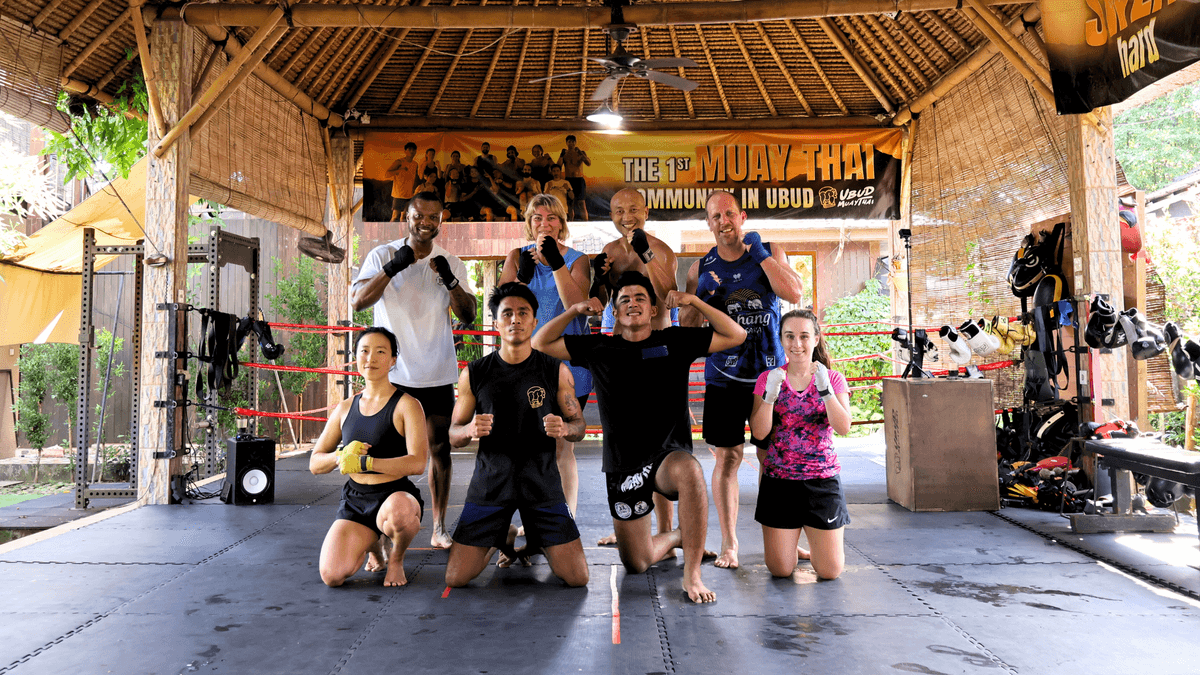
The fastest way to get comfortable is with consistent reps in a supportive room. Our Muay Thai classes at Ubud Muay Thai include guided clinch work for every level, so beginners can build control safely alongside more experienced training partners. When you are ready to go deeper on grips and positions, our full Muay Thai clinch techniques guide covers the next layer of detail.
Embrace the Clinch Early
The clinch feels awkward, exhausting, and a little intimidating when you start — and that is completely normal. But the students who lean into it early are the ones who develop real ring control, endurance, and confidence. Focus on three things every session: control your opponent's arms, land clean knees, and use timing to off-balance them. The strength and the flashy stuff will follow.
Ready to put it into practice? Come tie up with us — book a class at Ubud Muay Thai and feel the difference live, with coaches who will guide you through the clinch step by step.