

The clinch is one of the most distinctive parts of Muay Thai, but it's also where a lot of beginners quietly lose control of a fight without realizing why. It's not usually a lack of strength. It's a handful of habits that break posture, balance, or positioning before a single knee ever lands.
We covered the fundamentals of clinch control, including posture, knee strikes, and balance, in our full guide to the Muay Thai clinch. This piece breaks down the five specific mistakes that undo all of that, and what to do instead.
These mistakes rarely show up in isolation. In most cases, one small breakdown, a slightly upright stance or a moment of holding without attacking, sets off the next one, and by the time a fighter notices they've lost control of the clinch, three or four things have already gone wrong at once. Catching these habits early, one at a time, is what actually fixes clinch control long-term.
Why Clinch Control Decides Rounds
It's easy to underestimate how much of a fight actually happens in the clinch, especially as a beginner still focused on striking from range. But in Muay Thai, entire rounds are regularly won or lost through clinch control alone. A fighter who dominates posture and lands clean knees from the clinch can outscore an opponent who's technically sharper at range but has no answer once the fight closes to close quarters.
This is part of what makes the clinch such a distinctive part of Muay Thai compared to other striking sports. Where many combat sports separate fighters as soon as they get close, Muay Thai treats that close range as an entirely separate skill set worth training on its own. Fighters who avoid clinch training because it feels awkward or unfamiliar are leaving an entire dimension of the sport undeveloped, and it tends to show up as soon as they face someone who has put in the reps.
1. Using Too Much Strength Instead of Leverage
This is the most common mistake, and usually the first one beginners have to unlearn. The instinct in a clinch is to muscle your opponent around, but strength alone burns energy fast and rarely wins the position. Clinch control comes from leverage: forearm pressure, elbow position, and hip alignment doing the work instead of your arms.
The fix: focus drills on positioning and pressure rather than force. If you find yourself straining to move your partner, you're relying on strength instead of technique, and it's time to reset your grip and base rather than push harder. This is also the mistake that tires fighters out fastest in the clinch, so noticing it early saves your energy for the rounds that matter later.
2. Standing Too Upright
An upright stance in the clinch reduces your base and makes you easy to off-balance. Fighters who stand tall in close range are giving up the stability they need to control posture or deliver a clean knee.
The fix: keep your knees slightly bent and your weight settled through your hips, the same base you'd use in your regular stance. A lower center of gravity gives you far more control over both your own balance and your opponent's.
3. Ignoring Foot Positioning
It's easy to focus entirely on hand position and posture control in the clinch and forget what your feet are doing. Poor foot placement, feet too close together, weight on your heels, or feet square instead of staggered, makes it far easier for an opponent to sweep or off-balance you.
The fix: keep your feet slightly wider than shoulder-width, staggered rather than square, and check your foot position specifically during clinch drills instead of only focusing on your upper body.
4. Holding Without Attacking
The clinch isn't a resting position. Fighters who grab and hold without following up give their opponent time to recover posture, reset their base, and escape. Passive holding also tends to draw a break from the referee in competition, wasting the position entirely.
The fix: treat every clinch entry as a window to attack, not a pause. Even a single controlled knee, thrown with intent, keeps the position active and forces your opponent to react instead of reset. If you're not sure what to throw, a single straight knee to the midsection is almost always available and buys you time to reassess your grip and posture.
5. Losing Posture Control First
Most clinch exchanges are decided by whoever controls posture first. If your opponent gets your head down and your elbows flared out before you've established your own grip, you're already fighting from a compromised position, no matter how strong you are.
The fix: prioritize head and elbow position from the very first contact. Keep your elbows tight and your head up before worrying about offense. Posture control has to come first; everything else in the clinch depends on it. Think of the first second of any clinch entry as a small contest on its own; whoever wins that first second usually dictates everything that happens next.
Signs You're Making These Mistakes Without Realizing It
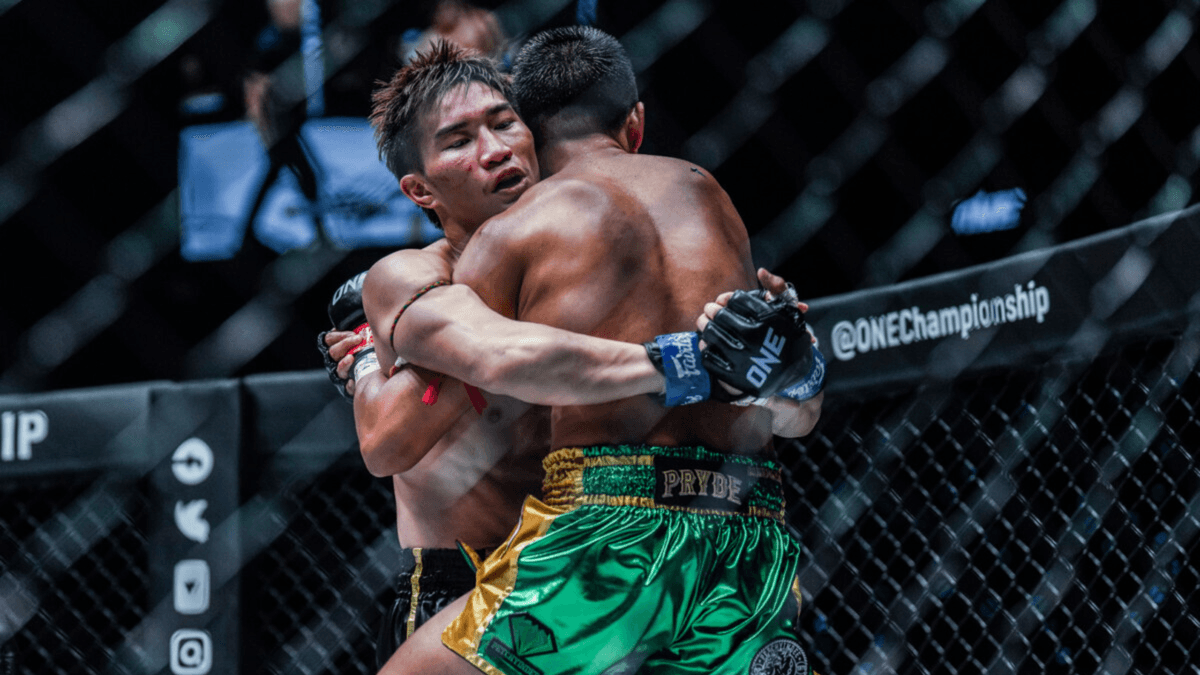
A few warning signs tend to show up before a fighter consciously notices which mistake is causing them: feeling consistently exhausted after clinch rounds even when your partner isn't especially strong, getting swept or off-balanced repeatedly by the same setup, or finding that you're always the one being pushed backward rather than controlling the exchange. Any of these are worth treating as a signal to slow down and check your foot position, posture, and grip individually rather than assuming you just need to try harder next round.
How to Actually Train This
Fixing these habits takes structured repetition, not just awareness. A few ways to train it properly:
- Slow positional drilling: Practice entering the clinch and establishing posture at half speed, focusing purely on foot position, grip, and base before adding any resistance. Speed and resistance should always come after the position itself feels automatic, not before.
- Resistance build-up: Once positioning feels natural, add light resistance from a partner, then gradually increase it as your control holds up. If your technique starts breaking down under resistance, that's a sign to dial the pressure back down rather than push through with strength.
- Live clinch rounds with a focus: Spend an entire round working on just one of these five fixes at a time, rather than trying to fix everything at once. Trying to correct all five mistakes simultaneously usually means none of them actually improve.
- Video review: If possible, film a few rounds of clinch sparring and watch them back. Most fighters are surprised by how upright their stance is or how often they're holding without attacking once they see it from the outside instead of feeling it from the inside.
Small, repeated corrections in these five areas make a bigger difference in your clinch control than raw strength ever will. Many of these same principles also apply against opponents of different sizes, which we break down in detail here. A taller fighter with a longer frame, for example, has to be even more deliberate about hip positioning to avoid getting pulled down and off-balanced by a shorter opponent working from underneath.
Train Clinch Control in Ubud
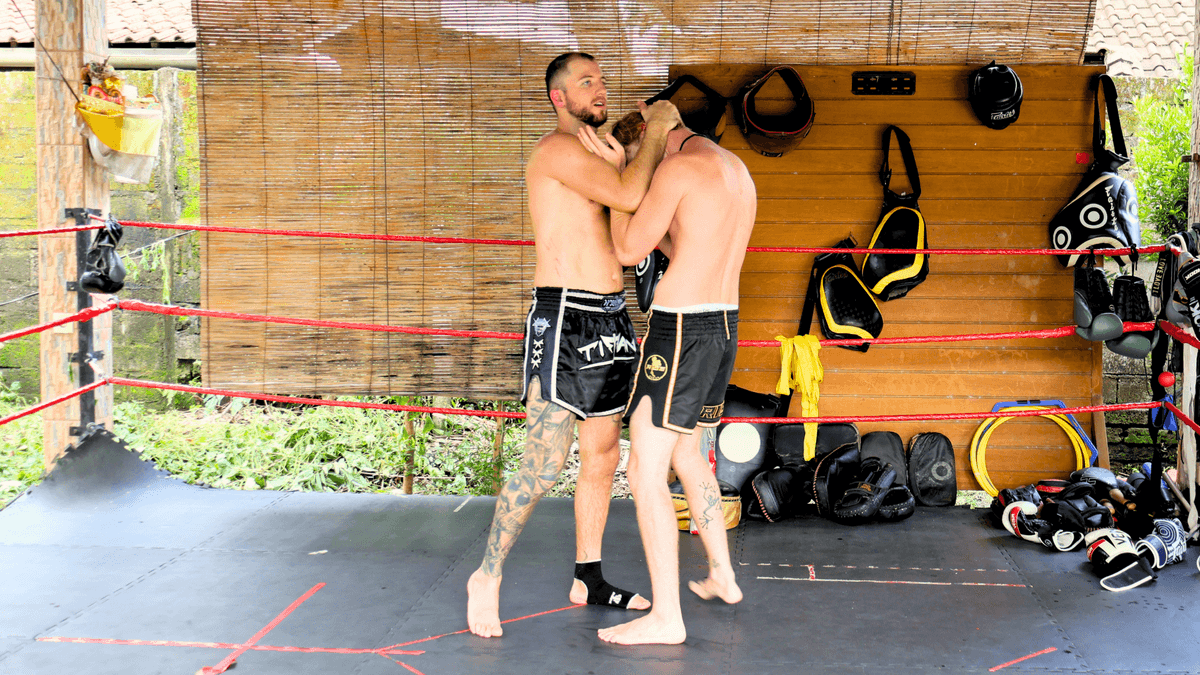
Clinch work takes hands-on correction to really click, which is why it's one of the areas where structured coaching makes the fastest difference. Reading about foot position or posture control is a useful starting point, but clinch mistakes are physical habits, and physical habits change fastest with a trainer watching in real time, adjusting your grip or stance the moment something drifts off. At Ubud Muay Thai, our trainers work through posture, positioning, and knee strikes with students at every level, correcting these exact habits in real time, whether you're stepping into the clinch for the first time or trying to clean up habits that have followed you for months.
If you're ready to clean up your clinch control, check our class schedule to find a session this week, or browse our full class list to see where clinch training fits into your path.