

Every fighter eventually steps in with someone who has a real size advantage: longer reach, heavier hands, more raw power behind every strike. It's an uncomfortable matchup, and a natural instinct is to try to match that power directly. That's usually the wrong approach.
Bigger fighters win by imposing their reach and power at the distance they prefer. The way to beat them isn't to out-muscle them at that range. It's to take the fight somewhere they're less comfortable, using speed, angles, and volume to make their size a disadvantage instead of a strength.
We covered the reverse matchup in our guide to beating smaller, faster opponents. This is the other side of that same problem.
Why Bigger Fighters Are Harder Than They Look
Reach lets a bigger fighter strike first and control distance before you're even in your own range. Their power means single shots carry more risk, so trading isn't a great strategy even if it feels tempting at the moment.
But size comes with real tradeoffs. Bigger fighters are usually slower to change direction, take longer to reset after committing to a strike, and often tire faster than smaller opponents once the pace picks up. Carrying more mass costs more energy to move, especially over a full fight, and that fatigue tends to show up earlier than most bigger fighters expect. Their mobility, especially lateral movement and quick footwork, tends to be their biggest weakness. That weakness is exactly what a smaller, faster fighter needs to exploit.
There's also a mental side to this matchup worth naming directly. Standing across from someone visibly bigger can trigger hesitation before a single strike is thrown, and that hesitation is often more costly than the actual size difference. Fighters who get outmuscled usually aren't beaten by power alone. They're beaten because they let the size gap dictate their game plan before the fight even started, backing up in straight lines and waiting to get hit instead of working the game plan that actually favors them.
Closing Distance on Your Terms
Standing at the range a bigger fighter prefers is the fastest way to lose. Their jab and teep control that distance, and their power shots land clean from there. The better approach is either staying well outside their range or getting inside it entirely, avoiding the middle distance where their reach dominates.
1. Cut the Distance Quickly
Rather than walking in steadily, close distance in quick bursts, using feints or a low kick to draw a reaction before stepping in. This reduces the time you spend exposed at the range where their reach and power matter most.
2. Attack the Legs Relentlessly
A bigger fighter's mobility is their real vulnerability. Consistent low kicks slow their movement, make them hesitant to plant their feet and load up on power shots, and wear down their base over the course of a fight. If their legs are compromised, their size advantage stops mattering as much.
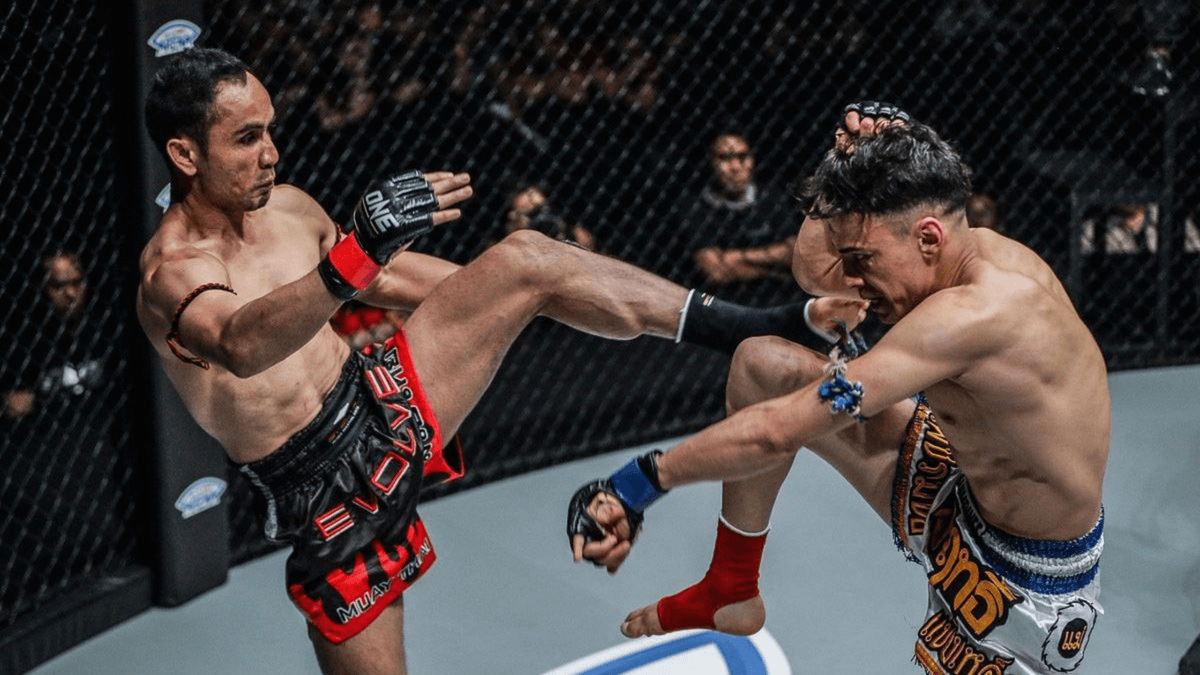
3. Use Angles Instead of Straight Lines
Moving straight backward just keeps you in their kill zone longer. Circling off at angles after your combinations forces a bigger fighter to reset and turn, which slows their offense and opens counters as they adjust.
4. Increase Your Output
Bigger fighters often rely on a smaller number of powerful strikes rather than high volume. Consistent, fast combinations, even if individually lighter, add up over a round and make it harder for them to find the timing for one clean power shot. Volume also forces decisions. A bigger fighter waiting for the one opening to land their power shot is far more dangerous than one who's constantly reacting to your output and never gets to set their feet.
Handling the Clinch Against a Bigger Fighter
The clinch usually favors size and strength, so the priority here is efficiency, not engagement.
1. Avoid Getting Stuck
Don't try to out-muscle a bigger fighter's frame in a prolonged clinch. Look for quick underhooks, land a short knee or two, and exit before they can fully control your posture.
2. Use Speed to Off-Balance, Not Strength
Small, quick pulls and pushes can disrupt a bigger fighter's base more effectively than trying to physically overpower their positioning. Off-balancing relies on timing far more than raw strength.
3. Control the Reset
If you get pushed backward or against the ropes, don't try to plant and fight from there. Use short pivots to escape and reset the distance where your speed advantage matters again.
Drills to Build Speed and Angle Awareness
- Burst Entry Drill: Practice closing distance in quick bursts from outside range, landing a combination, and exiting immediately rather than staying to trade.
- Low Kick Volume Drill: Focus rounds purely on landing low kicks consistently while moving, without committing to anything heavier.
- Angle Exit Sparring: After every combination, pivot to a new angle instead of retreating in a straight line. Make this automatic before adding intensity.
- Clinch Entry and Exit Drill: Practice entering the clinch, landing one or two knees, and disengaging quickly with a partner who resists.
Beating a bigger opponent isn't about finding one big equalizing shot. It's about consistently making them work at a pace and a range they're not built for, round after round.
Staying Composed When the Size Gap Is Obvious
It's easy to let a size mismatch get into your head before the first exchange happens. The fighters who handle this well tend to focus on execution rather than the matchup itself, sticking to their gameplan of distance, angles, and volume instead of reacting emotionally to getting hit hard once or twice. A single heavy shot doesn't mean the fight is lost. It means it's time to reset, get back to range, and keep working the plan that's designed around exactly this kind of opponent.
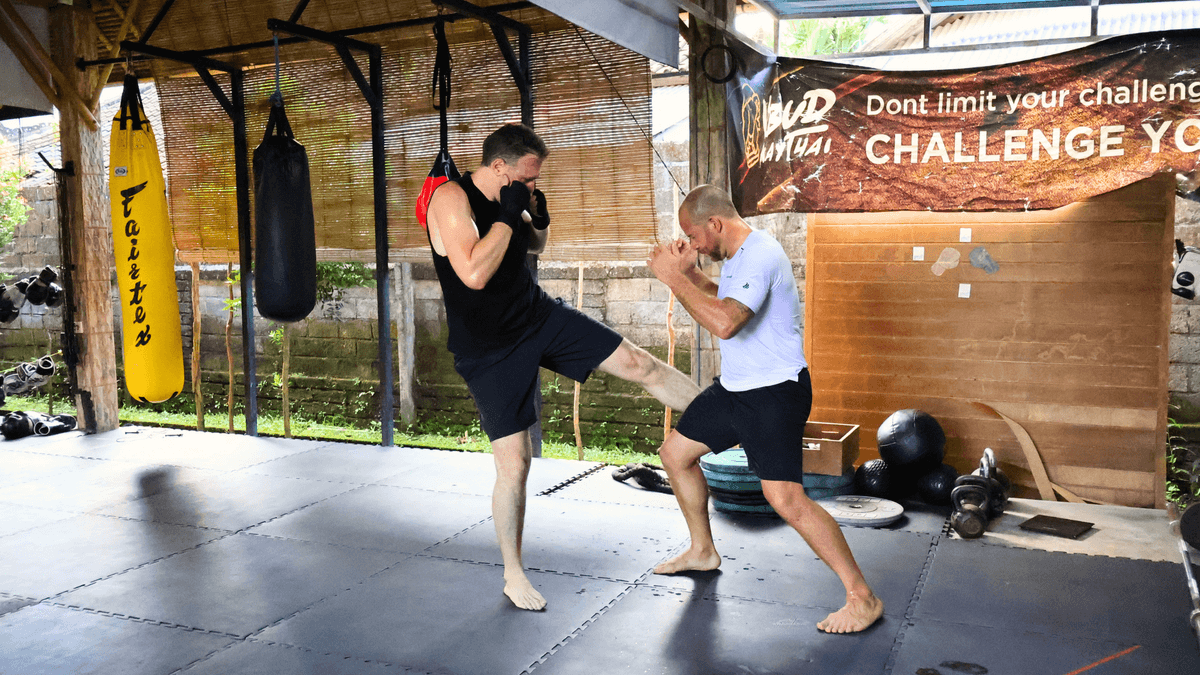
Train Speed, Angles, and Timing at Ubud Muay Thai
Facing a size disadvantage is part of training in any striking sport, and it's one of the best tests of whether your fundamentals actually hold up under pressure. At Ubud Muay Thai, our trainers help students build the speed, footwork, and timing needed to compete with anyone, regardless of size.
If you want to start training these tactics, check our class schedule to find a session this week, or browse our full class list to find the right training path for where you're starting from.