

Ask people why they first walked into a Muay Thai gym, and weight loss or fitness is only part of the answer. A lot of people show up because they need somewhere to put the stress of a hard week, and a regular gym routine of machines and mirrors doesn't quite do it. There's something specific about hitting pads, working through combinations, and being fully present for an hour that a treadmill session doesn't replicate.
That difference isn't just in your head. It comes down to what's actually happening in your body and brain during a training session, and why that experience is structurally different from most other forms of exercise.
What's Actually Happening in Your Body
Any intense physical activity releases endorphins and reduces circulating stress hormones like cortisol, which is part of why exercise in general helps with stress. But Muay Thai adds a few things a steady-state workout doesn't.
Striking, whether it's a heavy bag, pads, or shadowboxing, gives you a direct physical outlet for built-up tension in a way that running or cycling doesn't. There's a real, physical sense of release that comes from throwing a hard punch or a clean kick, something that's hard to replicate on a stationary bike. Combined with the elevated heart rate and full-body engagement of a typical class, this creates a more complete stress-discharge cycle than lower-intensity cardio tends to offer.
The unpredictability also matters. Pad combinations change, sparring partners react differently every round, and drills require constant small adjustments. That variability keeps your nervous system engaged in a different way than repetitive machine-based exercise, which tends to let your mind wander back to whatever's stressing you out in the first place.
There's also a breathing component that often goes unnoticed. Muay Thai training naturally teaches controlled exhales on strikes and steady breathing through combinations, which is close to the same mechanism behind deliberate breathwork practices used for anxiety and stress management. The difference is that in training, it happens automatically as part of the technique, rather than as a separate practice you have to remember to do.
Why You Can't Think About Work While Dodging a Punch
One of the more underrated aspects of Muay Thai as stress relief is how much it demands your attention. You genuinely cannot keep track of an inbox, a deadline, or a difficult conversation while you're reacting to a coach calling combinations or a partner throwing live strikes. The sport forces a kind of presence that's difficult to access voluntarily through willpower alone.
This isn't just anecdotal. Activities that require sustained attention and quick decision-making tend to be more effective at interrupting rumination, the repetitive, circular thinking that keeps stress active in your mind long after the triggering event has passed. A yoga class or a long walk can help you relax, but Muay Thai forces your brain to fully disengage from whatever you walked in with, because the cost of not paying attention is an actual missed block or a bad angle.
For many people, that forced mental break is worth more than the physical workout itself. You leave not just tired, but with some distance from whatever was weighing on you an hour earlier.
This is also why some people find Muay Thai more effective for stress than lower-intensity mindfulness practices, at least when they're first starting out. Sitting still and trying to quiet a busy mind can feel nearly impossible after a stressful day. Being forced into presence through physical demand, rather than trying to will yourself into it, tends to be a lower-friction way into that same mental state.
The Structure Itself Is Part of the Relief
Beyond the training itself, there's something calming about a structured hour with a clear beginning, middle, and end, especially for people whose days otherwise feel unstructured or overwhelming. A Muay Thai class has a defined warm-up, a technical section, pad or partner work, and a cool-down. You know roughly what to expect, even if the specific combinations vary.
That predictability, paired with physical exertion, gives your nervous system a rare combination: enough structure to feel safe, and enough intensity to actually discharge tension rather than just distract from it. It's part of why many students describe training as the most consistent part of an otherwise chaotic week.
Training Alongside Other People Matters More Than It Seems
Stress often comes with a sense of isolation, whether that's from work pressure, personal circumstances, or simply spending too much time alone with your own thoughts. Group training changes that dynamic. You're moving through the same drills as everyone else in the room, getting corrected by the same coach, and often partnering with someone else working through their own version of a hard week.
This social element isn't incidental to the stress-relief benefit; it's a real part of it. Consistent group training builds a sense of belonging and accountability that solitary exercise generally doesn't, and that community aspect is a big part of why people stick with Muay Thai long after the initial fitness goal that got them in the door. We touch on this same idea- discipline and consistency built through community rather than willpower alone- in our piece on the fighter's mindset.
What Changes After a Few Weeks
The stress-relief effect of a single class is real, but it compounds with consistency. Students who train regularly for a few weeks often report better sleep, more patience in day-to-day frustrations, and a noticeable drop in their baseline stress level, not just relief in the hours right after class.
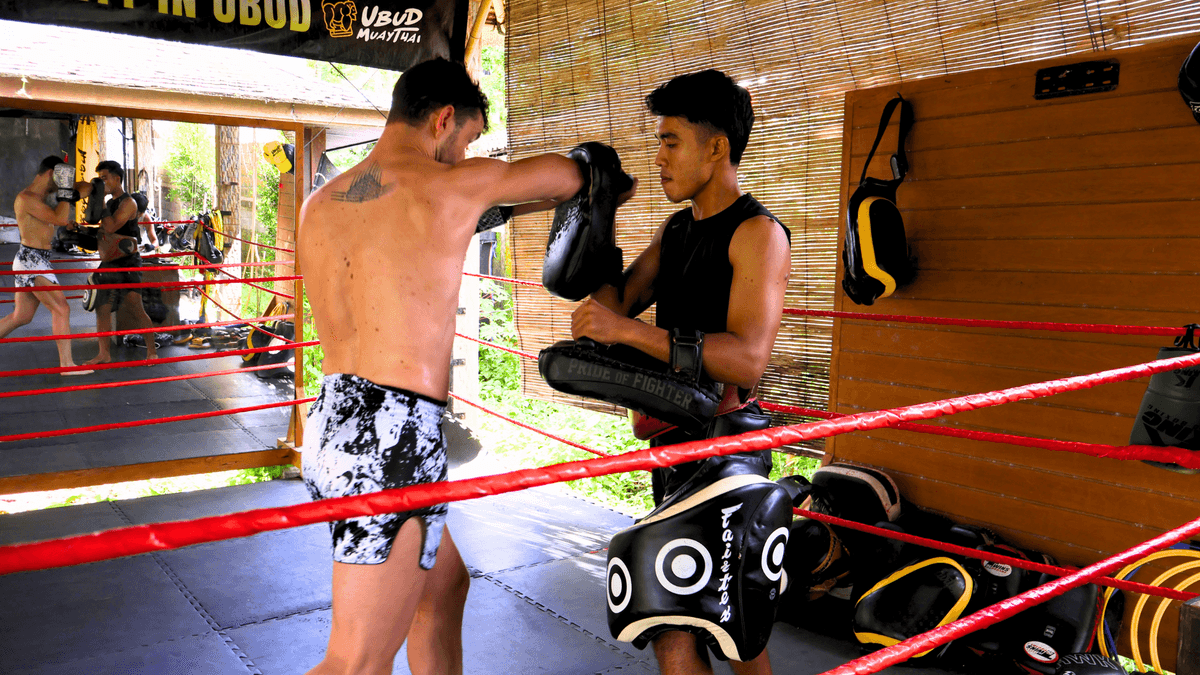
Part of this is physiological: regular exercise improves stress resilience over time, not just in the moment. Part of it is behavioral: showing up several times a week for something physically demanding builds a kind of discipline that tends to spill over into how people handle stress elsewhere in their lives. This overlaps with the physical changes covered in our guide to what actually happens in your first 30 days of Muay Thai training, where stamina and body composition improvements follow a similar gradual timeline.
Sleep in particular tends to improve faster than people expect. The combination of physical fatigue and mental discharge from a hard class makes it easier to actually wind down at night, rather than lying awake replaying the same stressful thoughts a sedentary day tends to leave unresolved. Better sleep then feeds back into lower baseline stress the next day, creating a cycle that reinforces itself the more consistently someone trains.
Common Mistakes That Undermine the Benefit
Not every approach to training actually relieves stress, and a few common habits work against it.
Training angry, without technical focus, tends to backfire. Swinging wildly to "let off steam" without paying attention to technique reinforces bad habits and often leaves people more frustrated, not less, when their form breaks down under fatigue.
Skipping recovery turns training into another source of stress on the body rather than relief from it. Overtraining without adequate rest raises cortisol rather than lowering it, working against the exact benefit people are training for in the first place. Basic mobility work between sessions helps prevent this from becoming an issue.
Treating every session like a competition against yourself or others adds pressure rather than relieving it. The stress-relief benefit comes largely from presence and release, not from constantly measuring performance against an external standard.
Getting Started in Ubud
You don't need any prior experience or a specific fitness goal to get the stress-relief benefit of Muay Thai. Beginners get the same forced presence, physical release, and structured environment as more experienced students, often within their very first few classes.
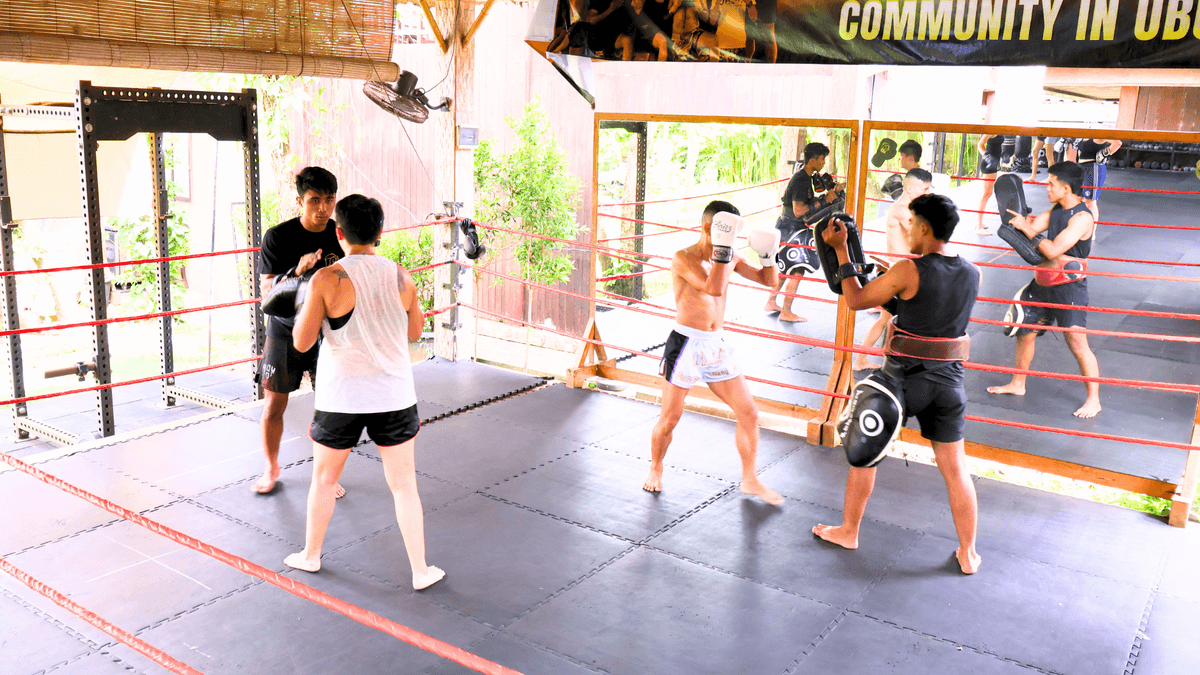
At Ubud Muay Thai, our classes are built to be approachable for complete beginners while still offering the intensity and structure that make this kind of training effective for stress relief. If a hard week has you looking for something more effective than a normal gym session, check our class schedule to find a time that works for you, or browse our full class list to see which class fits what you're looking for.