

If you've just started Muay Thai, or you're about to, there's a decent chance you've wondered whether you should be doing something extra outside of class. Should you be lifting? Is bodyweight training enough? Are you going to slow yourself down by adding the wrong kind of training on your off days?
Quick answer: for most beginners, bodyweight training is the better starting point, and you need far less extra training than you think. Weights become useful later, once your body already knows how to move.
Here's why, and how to actually structure it.
Why Bodyweight Training Comes First
When you're new to Muay Thai, your body is learning a lot at once: stance, balance, coordination between your hands and hips, how to absorb impact without tensing up. Bodyweight training, things like push-ups, squats, planks, and lunges, builds strength in a way that reinforces those same movement patterns rather than working against them.
It also lowers your injury risk. Beginners who jump straight into heavy lifting before their joints and stabilizing muscles are ready often end up dealing with strain or poor movement habits that carry over into class. Mastering control of your own bodyweight first builds a foundation that makes everything after it, including weights, safer and more effective.
This doesn't mean bodyweight training is just a beginner phase to get through quickly. Even experienced fighters keep it in rotation because it's low-equipment, low-impact on the joints, and keeps the body sharp between heavier sessions. A fighter with years of experience will still use push-up variations to warm up shoulders before pad work, or bodyweight squats to reset leg activation before a heavy sparring day. It never really gets "outgrown," it just gets used differently.
There's also a practical side to this for beginners specifically: you're likely already sore, adjusting to new movement patterns, and figuring out how your body reacts to regular training. Adding external load on top of that before your joints and connective tissue have adapted is one of the more common ways beginners end up sidelined in their first few months, not from anything dramatic, just accumulated strain from doing too much too soon.
Does Strength Training Slow You Down?
Not if it's structured properly. The concern most beginners have is that lifting will make them bulky, stiff, or slower in the ring. In practice, poorly designed programs can absolutely do that, but well-structured strength work does the opposite. It supports explosive strikes, improves your ability to absorb contact in the clinch, and helps your body hold up over months of consistent training.
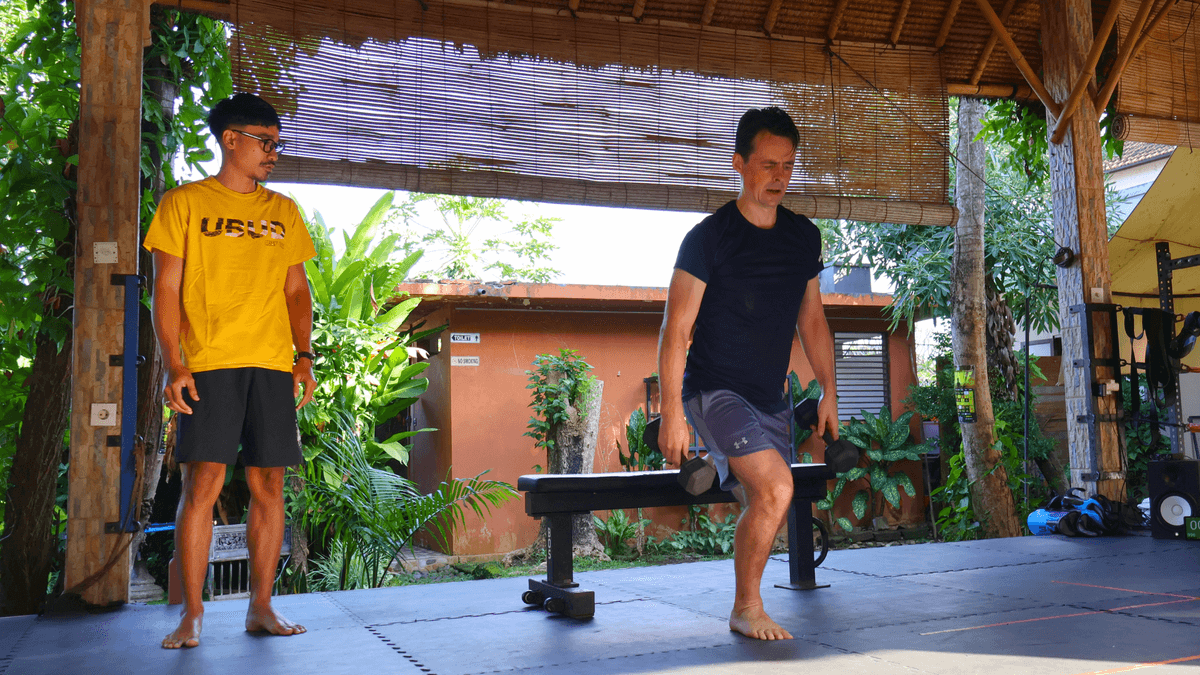
The mistake isn't strength training itself. It's adding heavy, poorly planned lifting too early, without the movement foundation to support it, or overloading your schedule so recovery from class suffers. Fighters who see the biggest gains from strength work are the ones who treat it as a complement to their striking training, not a separate goal competing for the same recovery window. If you're already sore and fatigued from three Muay Thai sessions a week, adding a fourth heavy leg day isn't building strength; it's digging into a recovery deficit that eventually shows up as a plateau or an injury.
Timing matters too. Lifting heavy right before a technical class can leave your legs dead for footwork, and your reflexes duller than usual. Most fighters find it works best to keep strength sessions on separate days from their hardest technical or sparring sessions, or at minimum several hours apart.
How Much Extra Training Do You Actually Need?
Less than most beginners assume. Two to three short bodyweight sessions a week, 20 to 30 minutes each, is plenty when you're just starting out and already training in class multiple times a week. Muay Thai itself is demanding conditioning work. Piling on hours of additional training too early usually leads to burnout or injury rather than faster progress.
A simple structure that works for most beginners:
- 2 short bodyweight sessions per week — push-ups, squats, planks, lunges, focused on control and form rather than reps.
- 1 mobility-focused session — hip openers, shoulder mobility, and light stretching to support the ranges of motion Muay Thai demands. This mobility routine is a good place to start.
- Rest or light activity on days after hard classes — recovery is part of the training, not a break from it.
Once this becomes easy and your movement is consistent, that's the point to start layering in structured strength work.
Recovery Matters as Much as the Training Itself
None of this works without recovery, and it's the part beginners tend to skip first. Sleep, hydration, and eating enough to support both your Muay Thai classes and your extra sessions all directly affect how quickly you adapt and how likely you are to get injured.
This doesn't mean you need a complicated diet plan in your first few months. It means eating enough protein to support muscle repair, staying hydrated through what is often sweat-heavy training in Bali's climate, and prioritizing sleep over squeezing in one more session when you're already running down. Fighters who progress fastest in their first year aren't usually the ones training the most hours. They're the ones who recover well enough between sessions to show up consistently, week after week, without burning out or getting hurt.
When to Start Adding Weights
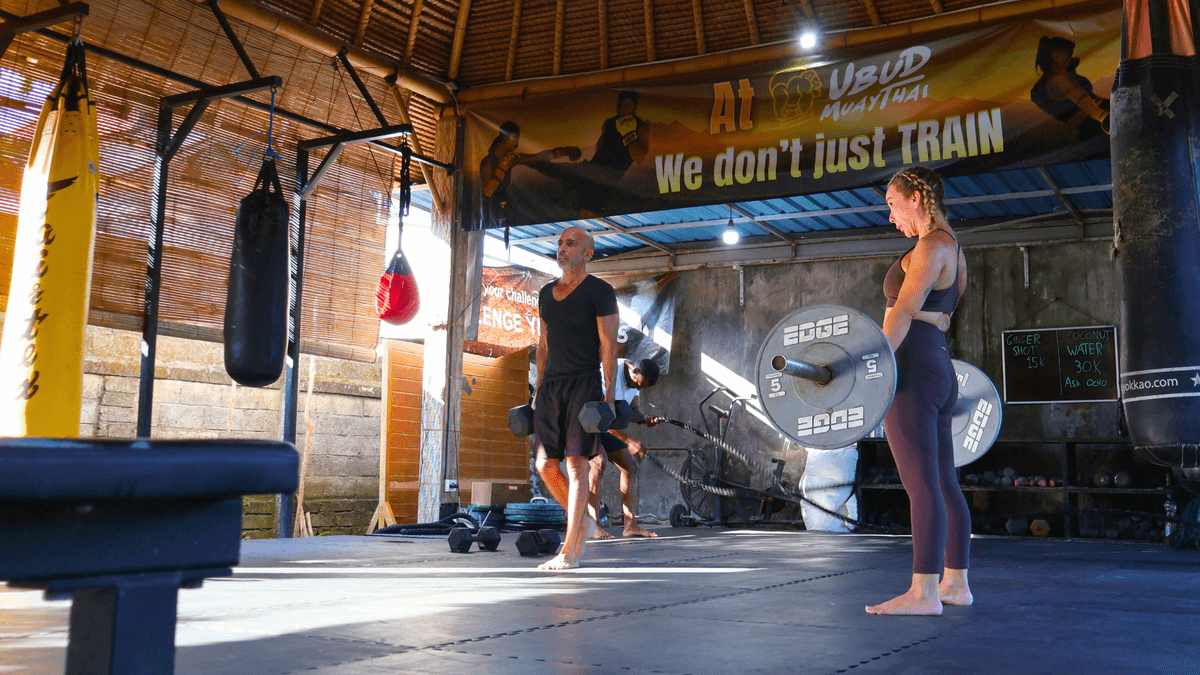
Once bodyweight movements feel controlled and easy, and you've been training consistently for a few months, introducing basic strength training makes sense. At that stage, you're not just building general fitness anymore. You're able to target specific areas, like hip strength for kicks or shoulder stability for punching power, safely.
We cover this progression in more detail, including what to focus on at beginner, intermediate, and advanced stages, in our full breakdown of calisthenics versus weight training. If you're further along in your training, that piece walks through how to shift your split as you progress. If you're just getting started, our beginner strength training guide is a better first stop.
Quick Answers to Common Questions
Do I need a gym membership to start Muay Thai? No. Bodyweight training at home is enough to build the strength foundation you need in your first months of training.
Will lifting weights make me a worse striker? Only if it's unstructured or excessive. Purposeful, well-timed strength training supports striking power rather than working against it.
How soon can I add weights after starting Muay Thai? Most beginners are ready to introduce basic strength work after a few consistent months of training, once bodyweight movements feel controlled.
Can I do strength training on the same day as class? Yes, but keep it light and separate it from your hardest technical sessions. A short bodyweight routine in the morning before an evening class is fine; heavy lifting right before pad work or sparring usually isn't.
What if I already lift weights before starting Muay Thai? You don't need to stop. Just scale back the volume in your first few weeks while your body adapts to the new demands of striking, footwork, and conditioning, then build your lifting schedule back up around your class days.
Build the Foundation First
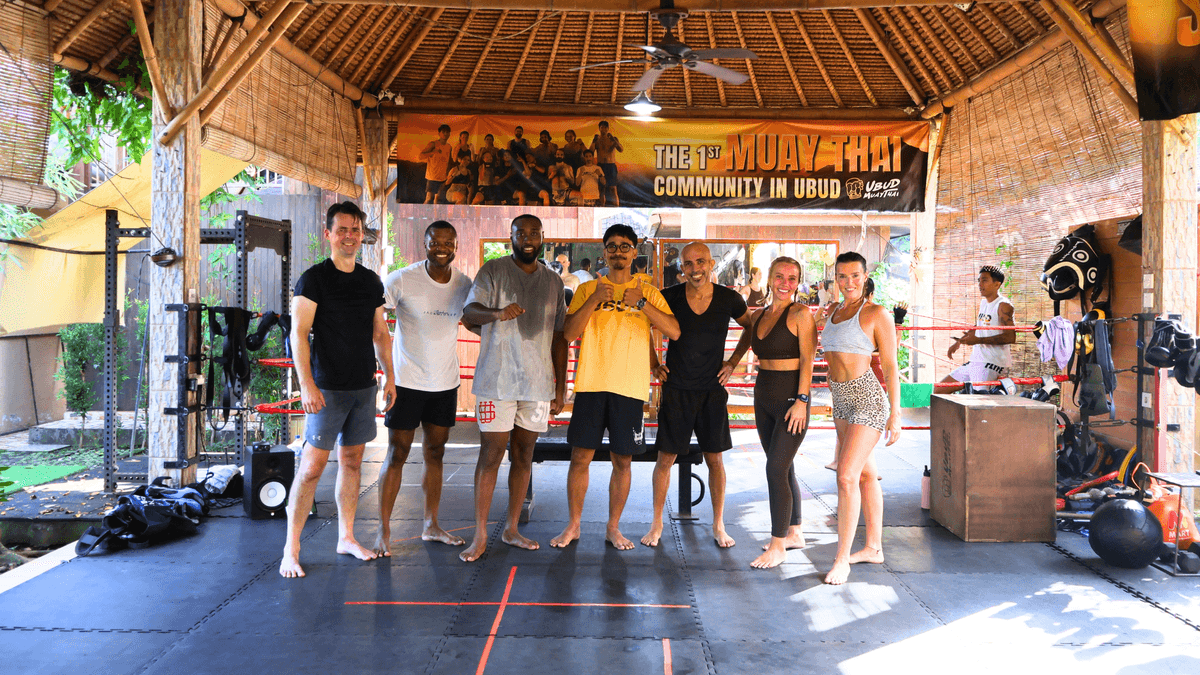
The goal in your first months isn't to out-train your schedule. It's to build a body that moves well, absorbs the demands of class, and recovers properly between sessions. Bodyweight training does that job better than a rushed lifting program ever will.
At Ubud Muay Thai, our trainers help beginners build this foundation the right way, both in class and with guidance on what to do outside of it. If you're ready to start, check our class schedule to find a beginner-friendly session, or browse our full class list to see where to begin.