

A lot of people think their kicks are the problem. They feel weak, unstable, or inconsistent, so the first instinct is to try to kick harder or faster.
But most of the time, that’s not the issue. What usually feels like “lack of power” is actually a mix of balance, timing, and how your body is supporting the movement. When those parts are off, the kick doesn’t land the way it should, no matter how much effort you put into it.
Improving your kicks isn’t about forcing more power. It’s about making the movement work properly first.
Power Doesn’t Come From the Leg Alone
It’s easy to think that stronger legs automatically mean stronger kicks.
They help, but they’re not the full picture.
Your kick starts from the ground. It moves through your hips, your core, and then into your leg. If that chain is disconnected at any point, you lose power before the kick even lands.
That’s why some people kick harder without looking like they’re trying.
They’re not forcing it. Their body is working as one movement instead of separate parts.
Balance Is What Holds Everything Together
If your balance isn’t stable, your kick will always feel off.
You might still land it, but it won’t feel clean, and you’ll often need to recover your position afterward. That recovery costs energy and breaks your rhythm.
This usually shows up as:
- wobbling after the kick
- needing an extra step to reset
- losing your guard while kicking
A strong base fixes a lot of this. When your standing leg is stable, your kick becomes more controlled without needing extra effort.
If this is something you’re dealing with, building your lower body properly makes a difference. These Muay Thai leg exercises are a good place to start.
Trying to Kick Hard Too Early Slows You Down
One of the most common mistakes is trying to generate full power before the movement is consistent.
You force the kick, tighten your body, and use more energy than needed. The result is usually:
- slower kicks
- less control
- more fatigue
Power comes from timing and coordination, not just effort.
When the movement is clean, power follows naturally. If the movement is forced, power drops.
Your Hips Do More Than You Think
A lot of the work in a good kick comes from your hips.
If your hips are not turning properly, your kick becomes more of a leg movement instead of a full-body movement.
That’s when it feels heavy, slow, and harder to control.
You don’t need to overthink it, but you do need to allow your body to rotate. Holding back that movement, usually out of tension or hesitation, reduces both power and fluidity.
Tension Kills Flow
The more tense you are, the harder it is to move cleanly. This shows up when:
- your shoulders tighten during the kick
- your breathing becomes irregular
- your movement feels forced
Tension makes everything heavier than it needs to be.
Relaxation doesn’t mean being loose without control. It means not using more effort than necessary.
This also connects to why people get tired quickly in training. When you’re constantly tense, your energy drops faster than it should.
Repetition Builds Control, Not Just Power
A lot of improvement comes from repetition, but not just repeating the same mistake. It’s about repeating the movement with awareness.
Start slower if needed. Focus on:
- balance during and after the kick
- smooth rotation
- controlled return to your stance
Speed and power will come from consistency, not from rushing the process.
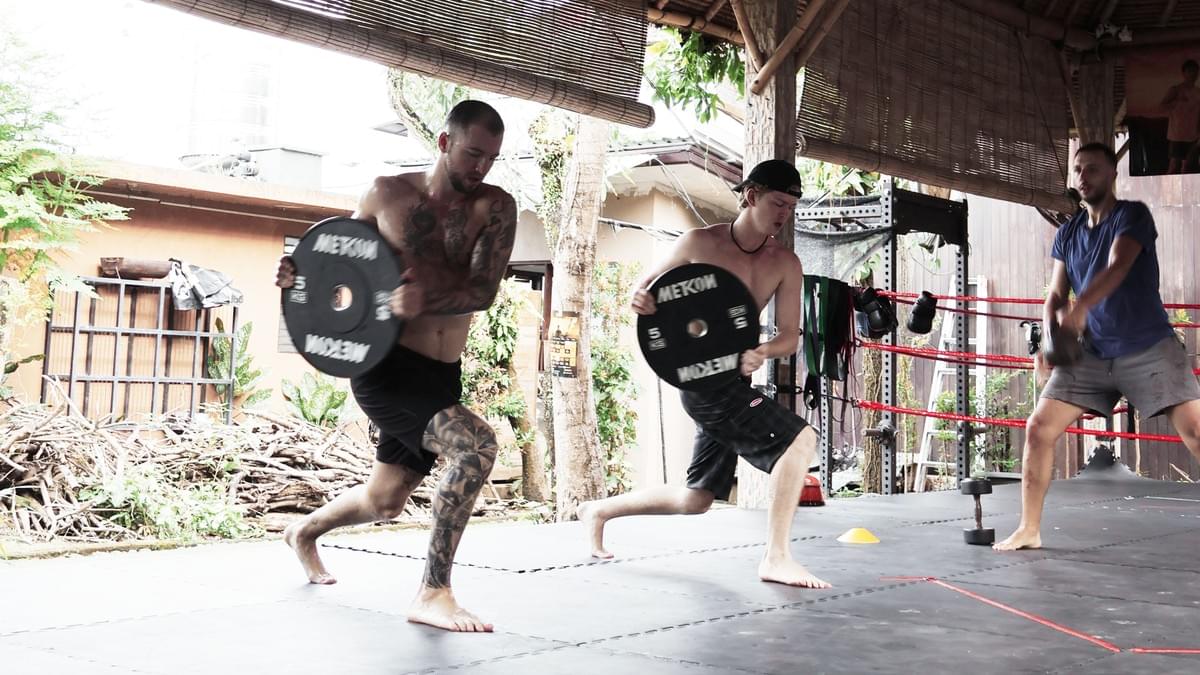
Conditioning Still Matters
Even with good technique, your body still needs to support the movement under fatigue.
If your legs and core are not conditioned, your kicks will lose stability as the session goes on.
That’s when form drops, and the kick starts to feel inconsistent again.
Adding the right kind of conditioning helps you maintain control across rounds, not just at the start of training.
What to Focus on During Your Next Session
Instead of trying to fix everything, pick one or two things to focus on.
- stay balanced on your standing leg
- avoid forcing power
- keep your breathing steady
- let the movement flow instead of tightening it
Small adjustments like this build over time.
Training Perspective
Better kicks don’t come from trying harder; they come from moving better.
Once your balance, timing, and coordination start to work together, power stops being something you chase. It becomes something that shows up on its own.