

Strength and speed win exchanges. Fight IQ wins fights. The ability to stay calm, read what your opponent is doing, and adjust before they do is what separates fighters who react from fighters who control the round.
What Is Fight IQ in Muay Thai?
Fight IQ is your ability to understand what is happening in a fight and make smart decisions in real time. It includes reading your opponent’s habits, managing distance, choosing the right strike at the right moment, and adjusting your strategy as the fight changes. In Muay Thai, fight IQ often matters more than raw power.
Two fighters can have the same technique and the same fitness, yet one consistently wins. The difference is usually decision-making. One fighter throws whatever comes to mind. The other notices that their opponent drops their hand after every kick, waits for the moment, and punishes it.
Fight IQ is not something you are born with. It is built through experience, observation, and deliberate practice. Every round you spar, every fight you watch, and every mistake you make adds to it.
Why Does Staying Calm Matter So Much?
Staying calm keeps your mind clear enough to think. When panic sets in, your breathing gets shallow, your muscles tense, and your vision narrows to the next punch coming at you. A calm fighter sees openings, conserves energy, and makes better decisions, even when the round is going badly.
Panic is expensive. It drains your gas tank faster than any combination, because tension burns energy even when you are not moving. It also makes you predictable, since panicking fighters fall back on the same one or two moves.
Composure is a skill, not a personality trait. Our guide on how to stay calm in a fight breaks down the physical and mental habits that help fighters stay steady when the pressure builds.
How Do You Stay Calm Under Pressure?
Stay calm by controlling your breathing, keeping your guard tight, and focusing on one simple goal at a time. Exhale with every strike, breathe steadily between exchanges, and relax your shoulders whenever there is a pause. A simple plan, such as “jab and move,” is easier to follow under stress than a complicated one.
When you are under pressure, your brain wants to do everything at once. Narrowing your focus helps. Instead of thinking about winning the round, think about the next small task: keep your hands up, check the next kick, land one clean jab.
Pressure also gets easier with exposure. The more often you experience it in controlled sparring, the less it overwhelms you. That is why regular, supervised sparring is one of the best tools for building composure.
How Do You Read Your Opponent in Muay Thai?
Read your opponent by watching their stance, rhythm, and habits. Notice which side they favor, how they react when you feint, whether they drop their hands after striking, and what they throw when they feel pressured. Most fighters repeat the same patterns, and spotting those patterns tells you where the openings are.
Start with the basics. Are they orthodox or southpaw? Do they stand square or bladed? Are they flat-footed or bouncing?
Then watch their reactions. Throw a jab and see whether they parry, slip, or step back. Feint a kick and see whether they lift their leg. These small tests reveal habits you can exploit later in the round.
What Should You Look for in the First Round?
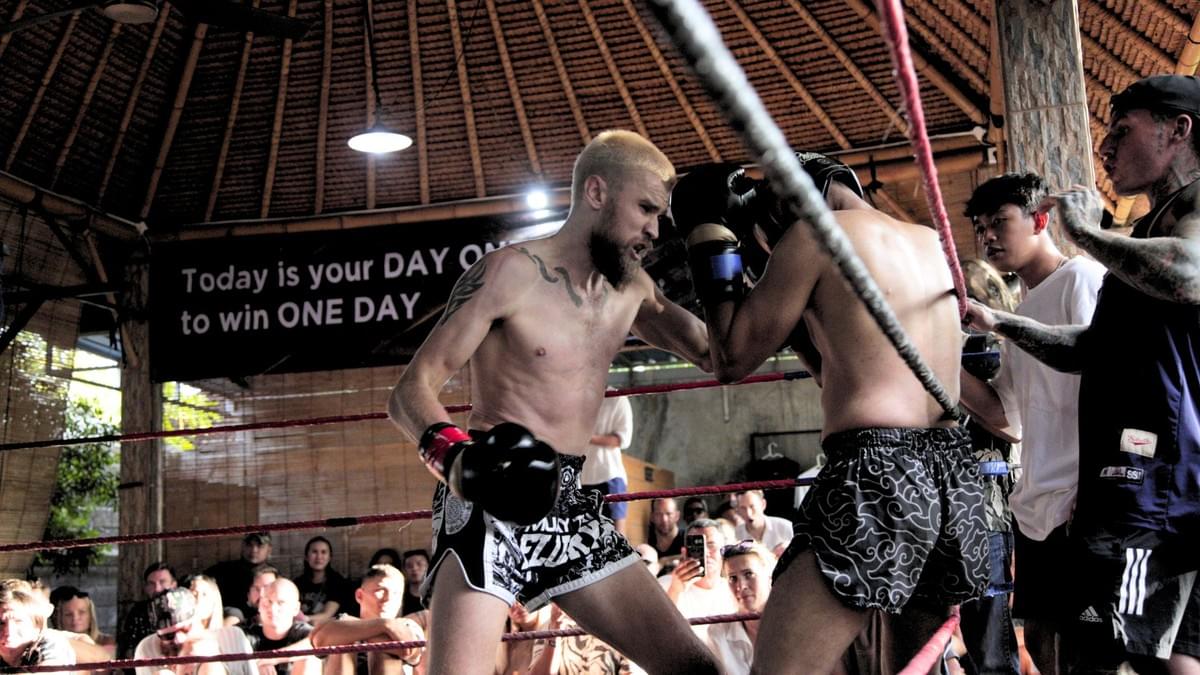
Use the first round to gather information. Watch your opponent’s stance, favorite strikes, defensive reactions, and rhythm, while showing them as little as possible about your own game. In traditional Muay Thai, early rounds are often slower for this reason: fighters are feeling each other out before committing to a strategy.
Throwing everything in the first minute often means wasting energy on strikes that do not land. A patient first round gives you the information you need to make the later rounds count.
Pay attention to what works and what does not. If your teep lands cleanly, keep using it. If your opponent checks every low kick, switch targets. Fight IQ is about adjusting to what is actually happening, not sticking to a plan that is not working.
How Do You Fight a Southpaw?
Against a southpaw, fight for outside foot position, so your lead foot sits outside theirs. That angle opens up your rear straight and rear kick to their body while making it harder for them to land their power side. Be ready for their rear kick and rear straight, which come from an unfamiliar angle.
Southpaws give many orthodox fighters trouble simply because they are less common. The strikes come from the opposite side, the angles feel strange, and the usual combinations do not line up the way they do in practice.
The best way to prepare is to study southpaws and train with them. Our list of the best southpaw boxers shows how left-handed fighters use their stance to create problems, and many of those lessons apply directly to Muay Thai.
How Do Feints Help You Read and Control an Opponent?
Feints are fake attacks that make your opponent react without you committing to a real strike. They reveal how your opponent defends, create openings for real strikes, and keep them guessing. A fighter who feints well controls the rhythm of the fight because the opponent never knows which movement is real.
A simple shoulder twitch, a half step forward, or a raised knee can all work as feints. Watch how your opponent responds. If they flinch every time you dip your shoulder, you have found a way to draw their guard and set up a real attack.
How Do Reaction Drills Build Fight IQ?
Reaction drills train your brain to recognize attacks and respond automatically. A partner throws strikes at random, and you defend or counter based on what you see. Over time, your reaction time improves and decisions that once needed thought start happening on instinct, freeing your mind to think about strategy instead.
The goal is to make defense and counters automatic so your conscious attention can focus on reading the bigger picture. If you have to think about how to block a kick, you cannot also think about what your opponent will do next.
Our article on boxing reaction drills includes simple drills you can use with a partner or on your own. Many of them work just as well for Muay Thai with a few added kicks and knees.
What Can Elite Fighters Teach Us About Fight IQ?
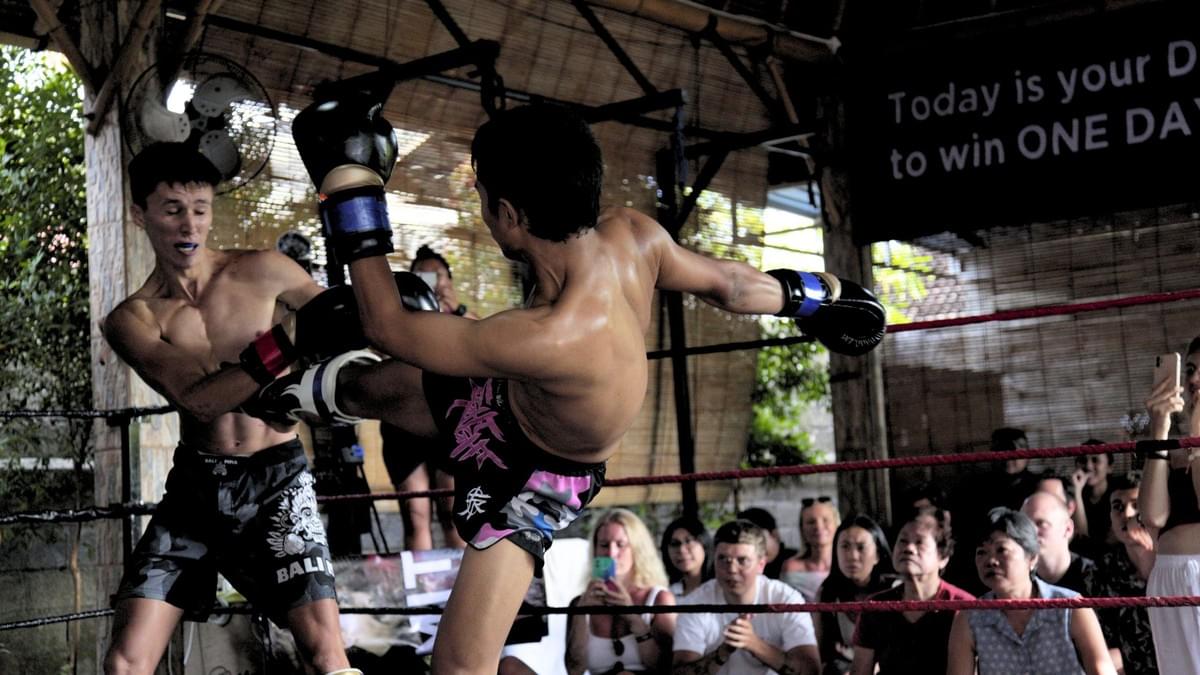
Elite fighters show that intelligence often beats athleticism. The best adapt mid-fight, solve problems their opponents present, and stay composed in high-pressure moments. Watching how they adjust between rounds is one of the best ways to develop your own fight IQ.
Terence Crawford is a great example. His ability to switch stances, read opponents, and adjust his approach throughout a fight made him one of the most complete fighters of his generation. Our breakdown of the mindset lessons behind Terence Crawford’s legacy explores how that intelligence was built.
When you watch fights, do not just follow the action. Ask why a fighter chose a strike, what they noticed, and how they changed their approach after each round.
How Do You Learn From Losing?
Losing is one of the fastest ways to build fight IQ, as long as you review it honestly. Look at what your opponent did that you could not answer, where you made poor decisions, and what you would change. Every loss shows you a gap in your game that winning would have hidden.
Many fighters avoid looking back at bad performances, but that is where the real lessons are. Our article on losing a fight covers how to process setbacks and use them to come back stronger.
Fight IQ and mindset go hand in hand. A fighter who stays curious, accepts mistakes, and keeps learning will keep improving long after others plateau. Read more about building that outlook in the mindset of a fighter.
How Should You Train Your Fight IQ?
Train fight IQ by combining technical drills, reaction work, and regular controlled sparring. Watch fights with a purpose, review your own rounds, and ask trainers what they see. Most importantly, spar often enough that reading opponents and staying calm become habits rather than goals.
Composure is built round by round, so book a session and start training your fight brain with our trainers at Ubud Muay Thai in Ubud, Bali.