

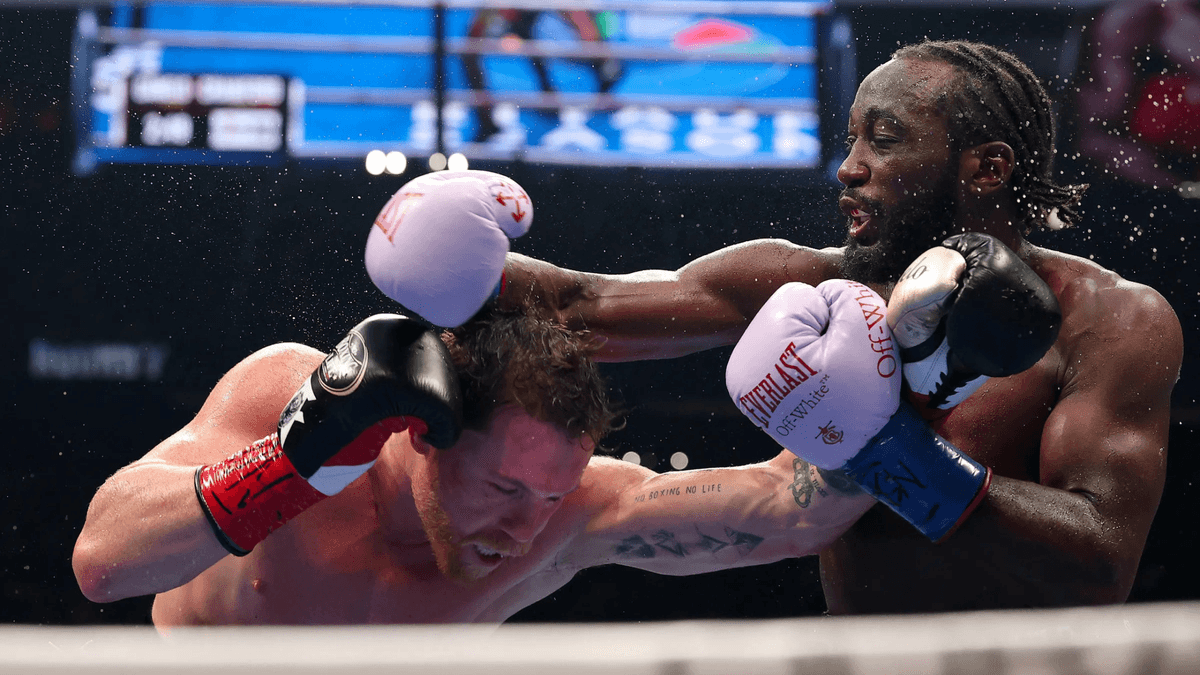
In December 2025, Terence "Bud" Crawford walked away from boxing undefeated, closing out his career at 42-0. He'd just delivered the biggest win of his life a few months earlier — a unanimous decision over Canelo Álvarez in September 2025 that made him the undisputed super middleweight champion. That victory also made him the first male fighter in the four-belt era to go undisputed in three different weight classes, a feat almost no one else in boxing history has matched.
Then, at the peak of it, he stopped.
Most fighters chase one more fight, one more payday, one more shot at a bigger name. Crawford didn't. That decision — walking away undefeated instead of testing his legacy further — says as much about his mindset as any fight on his record. It's worth breaking down, because the same principles that built his career apply directly to anyone training in combat sports, whether you're aiming for a title or just trying to show up for class after a long day.
The Career That Forces the Comparison
Crawford started boxing at seven years old, training under Carl Washington and Midge Minor at the C.W. Boxing Club in Omaha, Nebraska. He compiled around 70 amateur bouts, including wins over future champions Danny Garcia and Mikey Garcia, before turning pro in 2008 with a first-round knockout.
His rise wasn't instant. He won his first world title, the WBO lightweight belt, in 2014. By 2017, he was undisputed at light welterweight, holding all four major belts. He moved up to welterweight and dismantled Errol Spence Jr. in 2023 to become undisputed there too. Then, in September 2025, he moved up again to beat Canelo Álvarez and complete an almost unheard-of run: undisputed champion in three separate weight classes.
That's over a decade of moving up in weight, facing bigger and more dangerous opponents, and never losing. The mindset behind that run is what's worth studying — not just the technique.
If you want the technical side of how he did it, this breakdown of Crawford's fighting style covers his switch-hitting, counterpunching, and ring control in detail. This article is about what was happening in his head while he built it.
Discipline: Moving Up Without Losing Precision
Every time Crawford moved up a weight class, he was giving up his physical advantage and starting over against bigger, stronger opponents. That's a decision most fighters avoid — staying at a weight where you already dominate is safer and easier.
Crawford's willingness to keep testing himself at greater risk, rather than settling into comfort at lightweight or light welterweight, reflects a specific kind of discipline: doing the harder thing on purpose, repeatedly, because growth requires it. In training, this looks like choosing the sparring partner who challenges you instead of the one you can beat easily, or showing up for the class that exposes your weaknesses instead of the one where you already look good.
Patience and Ring IQ: Reading Before Reacting
Crawford built counters instead of chasing them. He'd probe early in a fight, study his opponent's rhythm, and only commit once he understood what he was dealing with. That patience is a mindset choice as much as a technical one — it requires resisting the urge to force something before you've actually seen the opening.
This is one of the harder habits to build in training, because instinct usually pushes in the opposite direction: to rush, to force an exchange, to prove something immediately instead of gathering information first. Fighters who develop patience under pressure tend to make fewer mistakes and waste less energy, whether they're three rounds into a fight or three minutes into a hard sparring session.
Confidence Without Recklessness: Retiring Unbeaten
Retiring at 42-0, right after the best win of his career, wasn't the safe or expected move. Confidence, in Crawford's case, wasn't about chasing more validation — it was trusting that the legacy he'd already built didn't need to be risked further to be real.
That's a distinction worth sitting with. Confidence in training isn't about proving yourself over and over; it's trusting the work you've already put in, even when it would be easier to keep chasing one more thing to prove.
Resilience: The Years Before the Spotlight
Crawford's biggest wins came late in a career that started with amateur fights most people never saw and early professional bouts that didn't make headlines. Years of unglamorous rounds came before the Canelo fight that finally got him mainstream recognition outside hardcore boxing circles.
Resilience, in this context, isn't just recovering from a knockdown — it's continuing to put in the work through years where the recognition hasn't caught up to the effort yet. That's true for most people who train seriously in any combat sport. The progress is real long before anyone outside the gym notices it.
Building This Mindset in Your Own Training
You don't need a title shot for these principles to apply. A few ways to build the same habits into your own training:
Set goals that stretch you, not just goals you'll clear easily. Whether it's sparring rounds, technical benchmarks, or simply showing up consistently, aim slightly past your comfort zone the way Crawford did every time he changed weight classes.
Practice observing before reacting. In padwork or light sparring, spend a round focused only on reading your partner's habits before you commit to combinations. This builds the same patience that let Crawford dictate fights instead of rushing them.
Treat quiet progress as real progress. Not every improvement gets noticed right away. Trust the process during the rounds nobody's watching — that's where most of the actual building happens.
Know when you've done the work. Confidence doesn't mean proving yourself endlessly. Sometimes it means trusting that the training you've put in is enough for what's in front of you today.
Train the Mindset, Not Just the Technique
Crawford's story is a boxing story, but the mindset behind it isn't specific to boxing. Discipline, patience, resilience, and grounded confidence are built the same way in Muay Thai, kickboxing, or any combat sport — through repetition, structure, and training partners who push you.
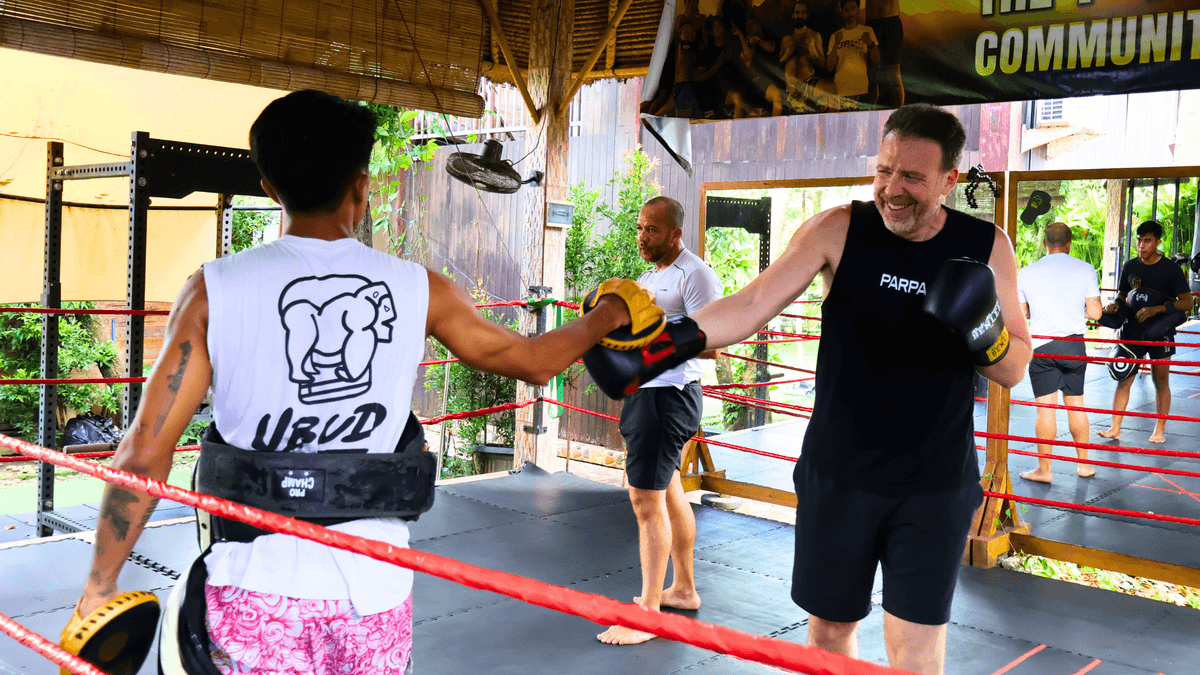
At Ubud Muay Thai, students build these habits alongside technique in every class, guided by trainers who focus on the discipline behind the sport, not just the strikes. If you're ready to start building that mindset yourself, check our class schedule to find a session this week, or browse our full class list to see which training path fits where you're starting from. Either way, you can book your first session here and start training in Ubud, Bali.