
Ubud is full of people working on laptops by day and looking for something real to do with their bodies after the screen goes dark. Muay Thai fits that life well, as long as you plan your training around your work instead of against it.
Can You Train Muay Thai While Working Remotely in Bali?
Yes. Many digital nomads in Ubud train Muay Thai several times a week while working full-time. The key is choosing class times that fit around your calls and deep work, picking a pass that matches your length of stay, and building in enough recovery so training energizes your workday instead of draining it.
Remote work gives you something most office workers do not have: control over your schedule. You can train in the morning before your inbox fills up, slip into an afternoon class after a focused work block, or keep evenings free for client calls in other time zones.
At Ubud Muay Thai in Ubud, Bali, classes run across the week at different levels, from Basic Muay Thai for complete beginners to advanced drilling and sparring. That range means you can start from zero and still have room to grow during a longer stay.
Why Is Ubud a Good Base for Remote Workers Who Train?
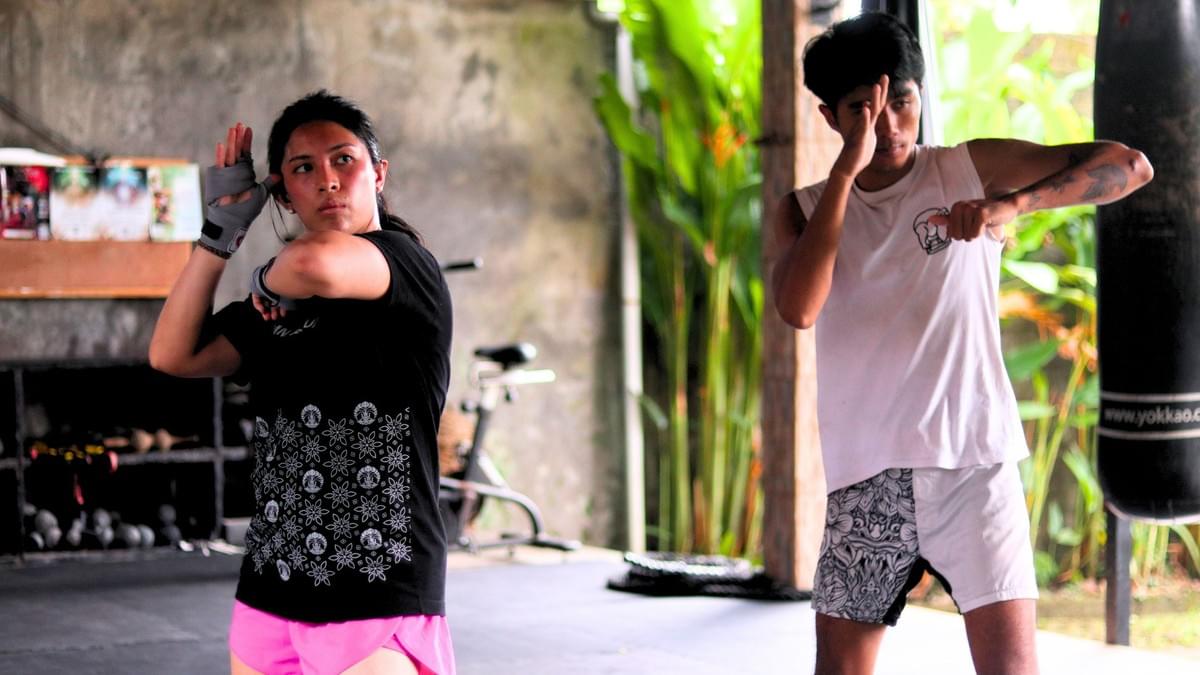
Ubud combines reliable coworking spaces, a calm pace of life, and a strong wellness community, which makes it easier to balance focused work with regular training. Everything is close together, so getting from your villa to a café to the gym takes minutes rather than hours spent in traffic.
The town has a different rhythm from Bali’s beach areas. Mornings start early, evenings are quieter, and many people come here specifically to build healthier routines. That environment supports consistent training rather than fighting against it.
Ubud also attracts a mix of people who stay for weeks or months, so you will often train alongside the same faces. That sense of community makes it easier to keep showing up, especially during busy work weeks.
How Often Should You Train When Working Full Time?
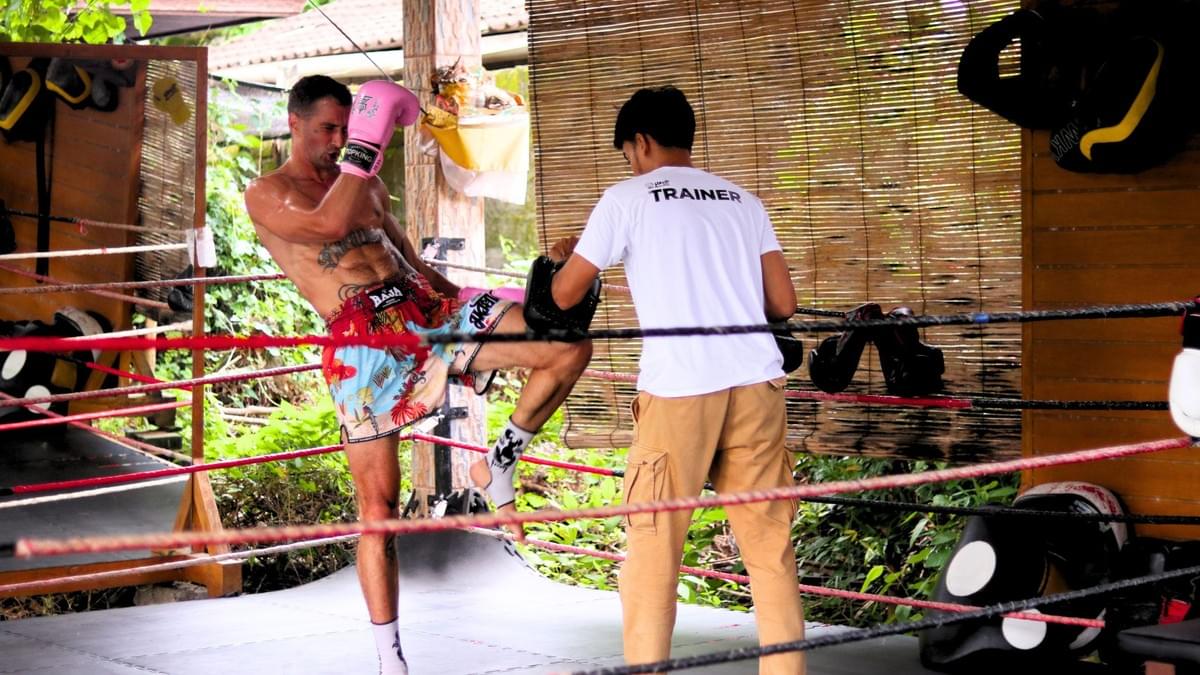
Most remote workers do well with three to four sessions per week. That is enough to build skill and fitness without leaving you too tired to focus at work. Beginners should start with two or three sessions in the first week and add more once their body adapts to the intensity.
More is not always better. Training every day on top of a full workload can lead to fatigue, poor sleep, and slower progress. Rest days are when your body actually gets stronger, and they give your mind time to absorb new techniques.
A simple structure works well: two technique-focused classes such as Basic Muay Thai or drilling, one high-energy Pads & Bags session, and one Strength Training or Conditioning class. Adjust based on how your body feels and what your work week looks like.
What Is the Best Time of Day to Train Around Work?
The best time depends on your work hours and time zone. Morning sessions suit people who want to start the day with energy and clear thinking. Afternoon sessions work well after a deep work block. Avoid training right before important calls, as post-training fatigue can affect focus for an hour or two.
Many nomads work with clients in Europe, Australia, or the United States, which often means early mornings or late evenings online. If your calls run late at night, a morning class lets you train while your clients are still asleep. If your mornings are packed with calls, an afternoon class gives you a break before evening work.
Check the current class times on our schedule and map them against your work calendar for the week. Treat your training sessions like meetings you cannot miss, and consistency becomes much easier.
Which Training Pass Suits a Longer Stay in Ubud?
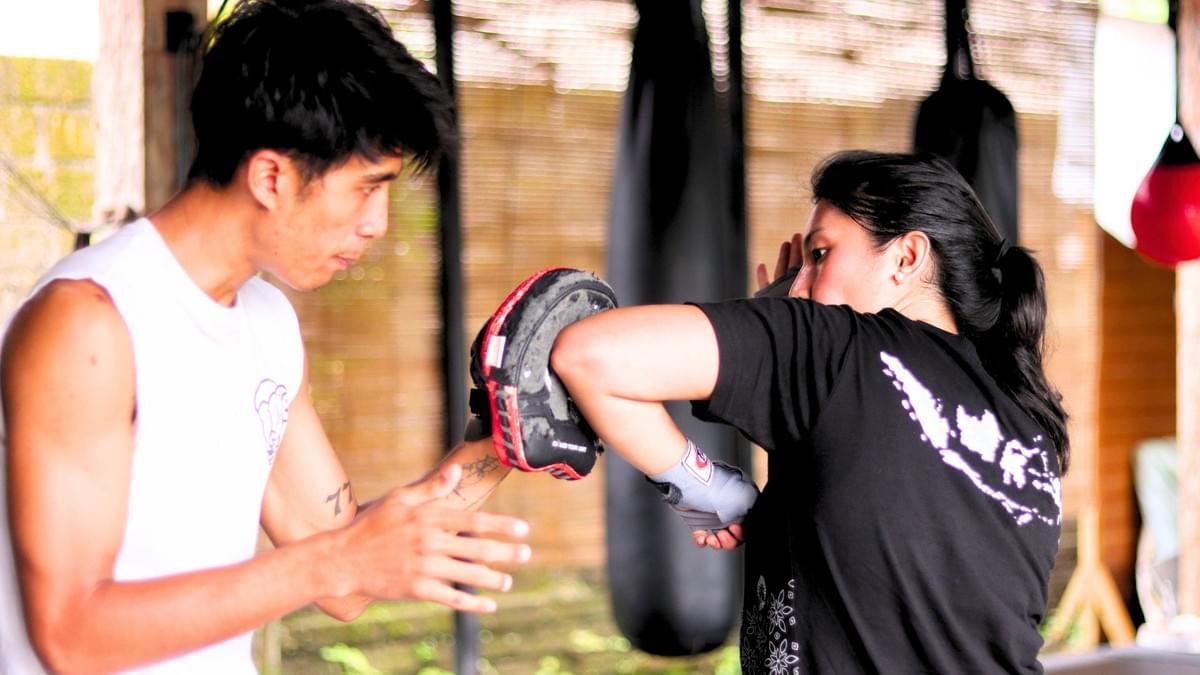
For stays longer than a week, a membership pass is usually the best value. A weekly pass is IDR 700,000, a bi-weekly pass is IDR 1,300,000, and a monthly pass is IDR 1,800,000. All memberships include classes and open gym access, and the monthly pass also includes 10% off merchandise.
If you are only in Ubud for a few days, an All Access daily pass at IDR 200,000 lets you join classes and use the open gym. An Open Gym daily pass at IDR 100,000 works if you want to train at your own pace on lighter days.
Every pass includes hand wraps, shin guards, and head guards, so you do not need to pack heavy gear in your luggage. Gloves in sizes 8 to 14 oz can be rented for IDR 50,000 per visit. For the full picture of every option, read how much training costs at Ubud Muay Thai.
Can You Live and Train in the Same Place?
Yes. Ubud Muay Thai offers monthly room rent for IDR 4,000,000, which includes a dedicated bedroom, shared kitchen and bathroom, and unlimited open gym and classes. For a more complete experience, all-inclusive training camps combine accommodation with workspace, Wi-Fi, fresh daily meals, and small-group training.
Living close to where you train removes the biggest excuse for skipping sessions: getting there. When the gym is steps away, an afternoon class becomes an easy break between work blocks rather than a trip you have to plan around.
The camp option suits remote workers who want structure. Accommodation comes with a workspace and Wi-Fi, and resort facilities include a co-working area, pool, and media room. Residents are limited to 12 at a time, which keeps the environment focused and personal. You can find these options on our services page.
How Do You Recover Between Training and Screen Time?
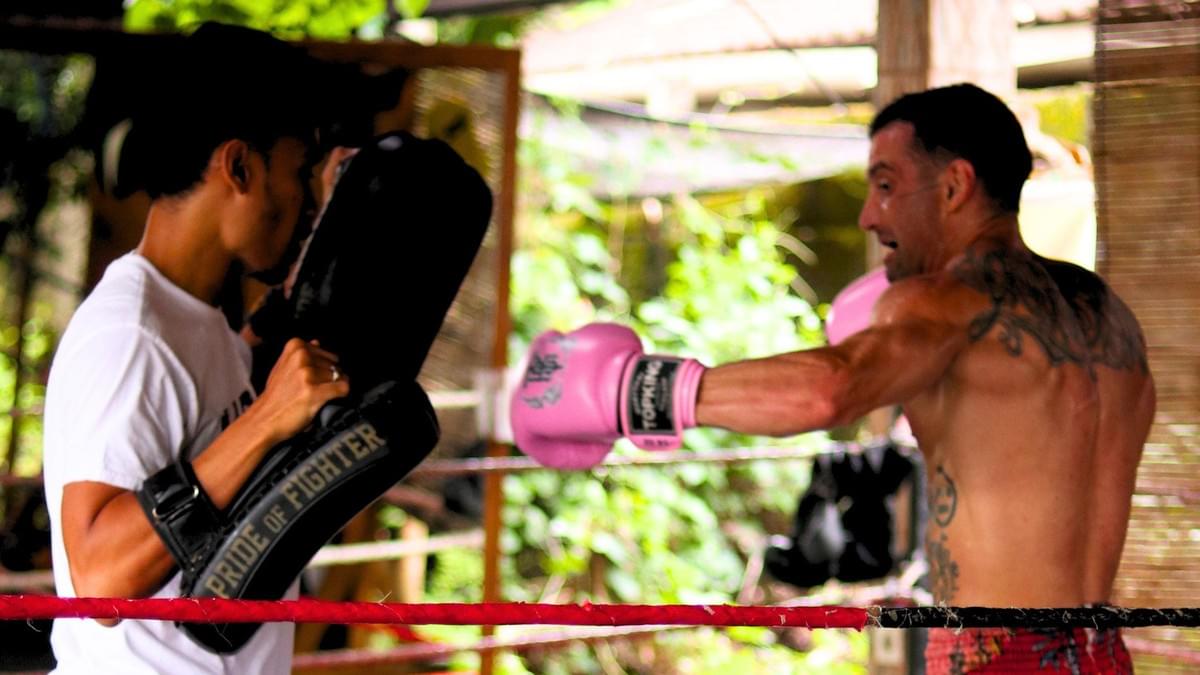
Recover by combining sleep, hydration, mobility work, and breaks from sitting. Long hours at a laptop tighten your hips, shoulders, and neck, which are the same areas Muay Thai demands the most from. A few minutes of stretching between work blocks makes a noticeable difference in how your body feels in class.
Desk work and Muay Thai can work against each other if you ignore recovery. Sitting shortens your hip flexors, while kicks and knees need them loose and strong. Hunching over a screen rounds your shoulders, while a solid guard needs them relaxed and stable.
Our guide to recovery in Muay Thai covers the routines most beginners skip. Pair it with the mobility drills on how to prevent injuries and stay mobile in Muay Thai training, and use them during short breaks in your workday.
Will Muay Thai Help Your Focus and Productivity?
For many remote workers, yes. A hard training session releases built-up stress, improves sleep quality, and gives your brain a complete break from screens. Many people find they return to work sharper and calmer, especially after a morning class or an afternoon session between work blocks.
Remote work can blur the line between work time and personal time. Training creates a clear boundary. For an hour, your attention is fully on your stance, your breathing, and the pads in front of you, with no room left for emails or deadlines.
That mental reset is one of the most underrated benefits of training. Our article on how Muay Thai training relieves stress explains why it works so well for people who spend their days in front of a screen.
What Should Your First Week Look Like?
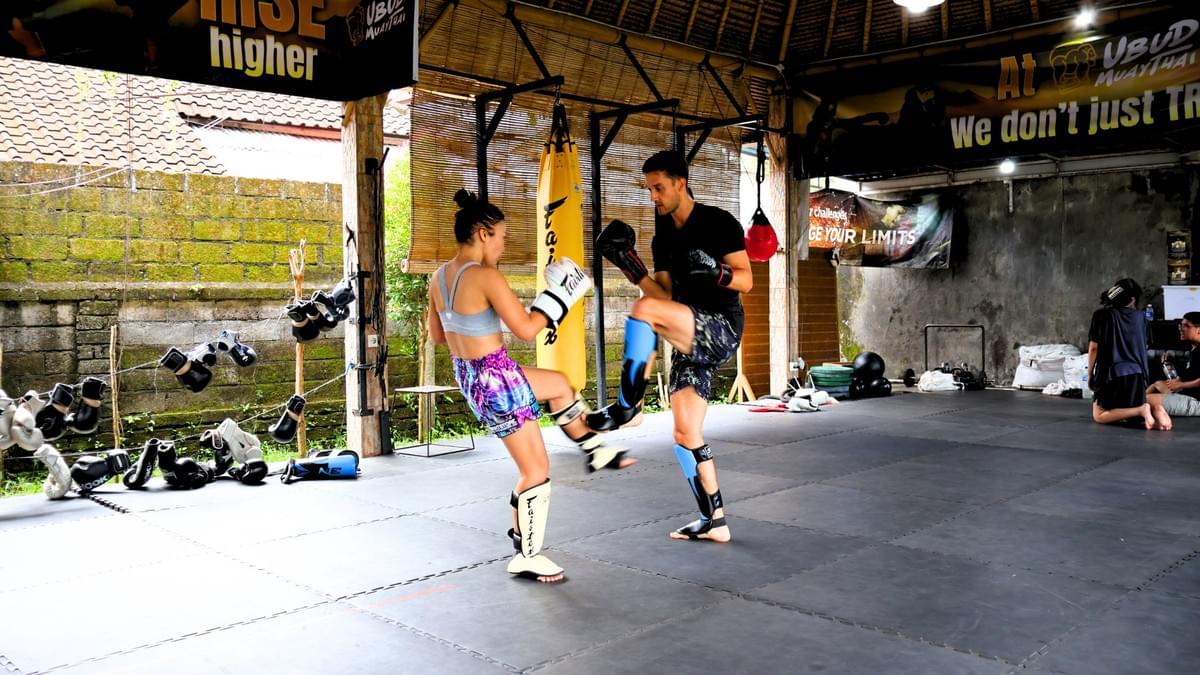
Your first week should focus on learning fundamentals, finding a training rhythm that fits your work, and letting your body adjust to the heat and intensity. Start with beginner classes, train every other day, and expect some soreness. By the end of the week, you will have a sense of how training fits your routine.
Do not try to do everything at once. Your first week is about building a habit, not proving how much you can handle. Pay attention to how training affects your energy at work and adjust your schedule from there. Drink more water than you think you need, especially if you train in the afternoon heat.
For a detailed look at what those first days actually feel like, read your first week training Muay Thai in Bali. Then fit training around your work week, check the timetable, and book a session that suits your schedule at Ubud Muay Thai in Ubud, Bali.