

To a newcomer, Muay Thai and kickboxing can look almost identical: two stand-up fighters throwing punches and kicks in a ring. But step a little closer and the differences are big — in the weapons allowed, the rules, the rhythm, and even the culture behind each sport. Understanding them will help you appreciate what you're watching and decide which one to train in.
Here's a clear, beginner-friendly breakdown of Muay Thai vs kickboxing.
What Is Muay Thai?
Muay Thai is the national sport and martial art of Thailand, famously known as "the art of eight limbs." That nickname comes from its eight points of contact: two fists, two elbows, two knees, and two shins. Add in clinch fighting, sweeps, and a rich layer of tradition and ceremony, and Muay Thai is one of the most complete and battle-tested striking arts in the world.
What Is Kickboxing?
Here's the key thing most people miss: "kickboxing" isn't one single sport — it's an umbrella term covering several rulesets. It emerged in the 1960s and 70s, when practitioners in Japan and the United States blended karate with boxing (and, in Japan's case, with Muay Thai influence). Today, it spans American/full-contact kickboxing, Dutch-style kickboxing, and K-1 rules, among others, and the rules differ meaningfully between them. As a result, what's legal in "kickboxing" depends entirely on which ruleset you're talking about.
The Key Differences at a Glance
- Weapons: Muay Thai uses eight (fists, elbows, knees, shins). Most kickboxing uses punches and kicks, with knees allowed in some rulesets and elbows almost never.
- Clinch: Central to Muay Thai; heavily limited or banned in kickboxing.
- Elbows: Legal in Muay Thai; illegal in nearly all kickboxing.
- Leg kicks: Legal in Muay Thai and most modern kickboxing — but banned in American full-contact kickboxing.
- Pace: Muay Thai is more measured and power-focused; Dutch and K-1 kickboxing tend to be faster and higher-volume.
- Rounds: Muay Thai is traditionally five rounds; kickboxing is often three.
Now let's unpack the ones that matter most.
Weapons: Eight Limbs vs Four
The biggest difference is the arsenal. Muay Thai lets you strike with fists, elbows, knees, and shins, while most kickboxing rulesets limit you to punches and kicks (with knees permitted under K-1 rules). This single difference shapes everything about how each sport is fought.
Because the legal weapons differ so much, so do the illegal ones — and knowing exactly what's off-limits is essential before you spar or compete. Our guide to illegal moves in Muay Thai lays out the boundaries of the Thai ruleset in detail.
The Clinch
In Muay Thai, the clinch is a core skill — fighters tie up at close range to control each other and land knees and elbows, and they're allowed to work there for extended periods. In most kickboxing rulesets, clinching is broken up almost immediately by the referee or banned outright. If you love the close-range, grappling-adjacent chess match of the clinch, that's pure Muay Thai territory.
Elbows and Leg Kicks
Elbows are one of Muay Thai's most dangerous and distinctive weapons — and they're illegal in virtually all kickboxing. Leg kicks (to the thigh and calf) are legal in Muay Thai and in modern kickboxing styles like Dutch and K-1, but they're banned in American full-contact kickboxing, which keeps strikes above the waist. These rules directly shape each sport's tactics.
Stance, Footwork, and Pace
The rule differences create different styles. Muay Thai fighters tend to stand more square and upright, with less bouncing — a stance that lets them check kicks with their shins, defend the clinch, and throw powerful kicks and knees. The pace is often more measured and methodical, prioritising clean, damaging strikes.
Kickboxers — especially in the Dutch tradition — tend to use a more bladed, mobile stance with bouncier footwork (a nod to their boxing roots) and fire off faster, higher-volume combinations. Neither is "better"; they're optimised for different rules.
Scoring and Rules
Traditional Muay Thai is fought over five rounds and rewards clean, powerful kicks and knees, clinch control, balance, and ring dominance — volume alone won't win you a round. Kickboxing is commonly fought over three rounds and, depending on the ruleset, tends to reward effective aggression, clean striking, and output. Because kickboxing has multiple sanctioning bodies, the exact criteria vary from promotion to promotion.
Culture and Tradition
This is where Muay Thai stands apart entirely. Before a fight, Thai fighters perform the Wai Kru Ram Muay, a ritual dance honouring their teachers and gym, often wearing a mongkol (headband) and prajioud (armbands), accompanied by traditional sarama music throughout the bout. Kickboxing, by contrast, is a more straightforward modern combat sport without these ceremonial roots. For many practitioners, that cultural depth is a huge part of Muay Thai's appeal.
Which Should You Train?
Both are fantastic for fitness, coordination, confidence, and self-defence — so you can't go wrong. To choose:
- Choose Muay Thai if you want the most complete striking art — elbows, knees, and the clinch included — plus the tradition and culture behind it.
- Choose kickboxing if you're drawn to fast hands, slick footwork, and high-volume combination striking.
The good news? The fundamentals overlap heavily, and many gyms — including ours — let you train both. Our Muay Thai and kickboxing classes at Ubud Muay Thai welcome all levels, so you can try each and feel the difference for yourself.
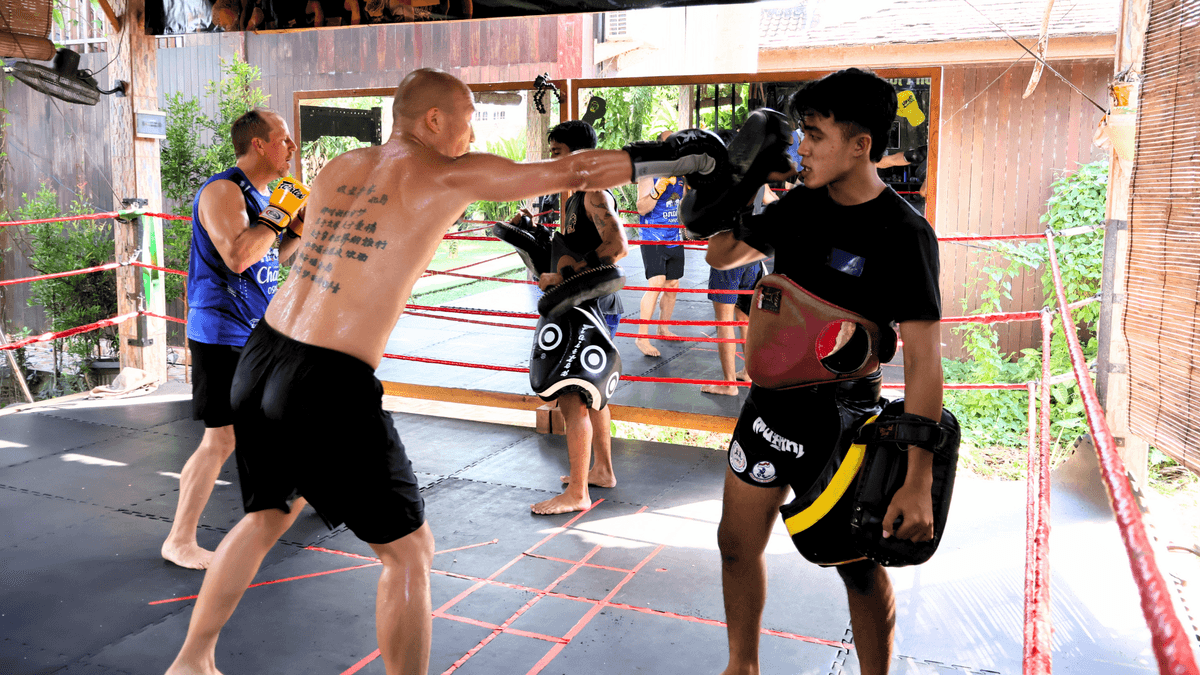
Two Arts, One Great Choice
Muay Thai and kickboxing share the same roots in stand-up striking, but Muay Thai's eight weapons, clinch, elbows, and deep cultural tradition set it apart, while kickboxing offers fast, dynamic, high-output striking across several rulesets. Whichever you pick, you'll build real skill, serious fitness, and a lot of confidence.
The best way to decide is to step on the mats and try. Book a class at Ubud Muay Thai and experience it for yourself.