

Here's a truth that surprises a lot of fighters: you don't get stronger during training — you get stronger when you recover from it. Hard sessions break your body down; rest, sleep, and smart recovery are what build it back up better. Skip that side of the equation, and you plateau, burn out, or get injured.
For combat athletes especially — where the training is intense, and the impact is real — recovery isn't a luxury or a sign of weakness. It's part of the work. This guide covers how to do it well: sleep, active rest, stretching, fuel, and knowing when your body is asking for a break.
Why Recovery Is Where You Actually Get Better
Training is a stimulus; adaptation is the response, and adaptation happens during rest. When you recover properly, your body repairs muscle tissue, refills energy stores, and comes back stronger than before. When you don't, fatigue piles up faster than your body can clear it, and performance slides backward.
Chronically skipping recovery is also one of the fastest routes to overuse injuries. Recovery and injury prevention go hand in hand — our guide on how to avoid and prevent common Muay Thai injuries pairs perfectly with this one, because rested tissue is resilient tissue.
Sleep: The Most Powerful Recovery Tool
If you only fix one thing, fix your sleep. It's the single most effective recovery tool available, and it's free. During deep sleep, your body releases growth hormone, repairs muscle, and consolidates the motor learning from your training — meaning you literally get better at your techniques while you sleep.
Aim for consistent, quality sleep each night, and treat it like part of your training plan:
- Keep a regular sleep and wake time, even on rest days.
- Wind down before bed — dim screens and lights in the last hour.
- Keep your room cool, dark, and quiet.
- Avoid late caffeine and heavy meals, which fragment your sleep.
No supplement or recovery gadget comes close to what a solid night of sleep does.
Active Rest vs Passive Rest
Rest days don't have to mean lying on the couch. There are two valuable kinds of rest, and good athletes use both.
What Is Active Recovery?
Active recovery is light, low-intensity movement on your off days that boosts blood flow, eases stiffness, and speeds repair without adding training stress. Think a gentle walk or swim, easy cycling, light shadowboxing, yoga, or a relaxed mobility flow. The goal is to move and feel better afterward — never to grind.
When to Take Full Rest
Sometimes your body needs genuine, passive rest — complete days off with no structured activity. If you're deeply fatigued, sore, run-down, or fighting off illness, full rest is the smarter choice. Learning to tell the difference between "I'm a little stiff" (active recovery) and "I'm wrecked" (full rest) is a skill worth developing.
Stretch and Mobility on Recovery Days
Recovery days are the ideal time for the stretching and mobility work that's easy to neglect when you're focused on training. Unlike before a session, this is when static stretching shines — your muscles respond well to longer holds, helping restore length and reduce stiffness.
Spend time on the areas that combat sports tax the most, especially your hips. A gentle session with our hip mobility exercises for Muay Thai on an off day will keep your kicks high and your joints happy over the long run.
Fuel and Hydrate for Recovery
Recovery is also fueled by what you eat and drink. After hard training, your body needs protein to repair muscle and carbohydrates to refill energy stores, ideally from whole, nutrient-dense foods. Just as importantly, stay well hydrated — especially in a hot climate, where you lose fluids and electrolytes faster than you realise. Dehydration slows recovery and saps performance, so make consistent hydration a daily habit, not an afterthought.
Listen to Your Body: Signs You Need More Recovery
Your body sends clear signals when it's under-recovered. Watch for:
- Persistent soreness that doesn't fade between sessions
- Constant fatigue or trouble sleeping despite being tired
- Irritability, low motivation, or a dip in mood
- Performance going backward — slower, weaker, flatter than usual
- Getting sick more often than normal
A cluster of these is a sign to back off and let your body catch up. Pushing through them is how overtraining and injuries take hold.
Build Recovery Into Your Week
Recovery works best when it's planned, not improvised. Schedule rest days into your week the same way you schedule training, and consider a lighter "deload" week every month or so to let accumulated fatigue clear.
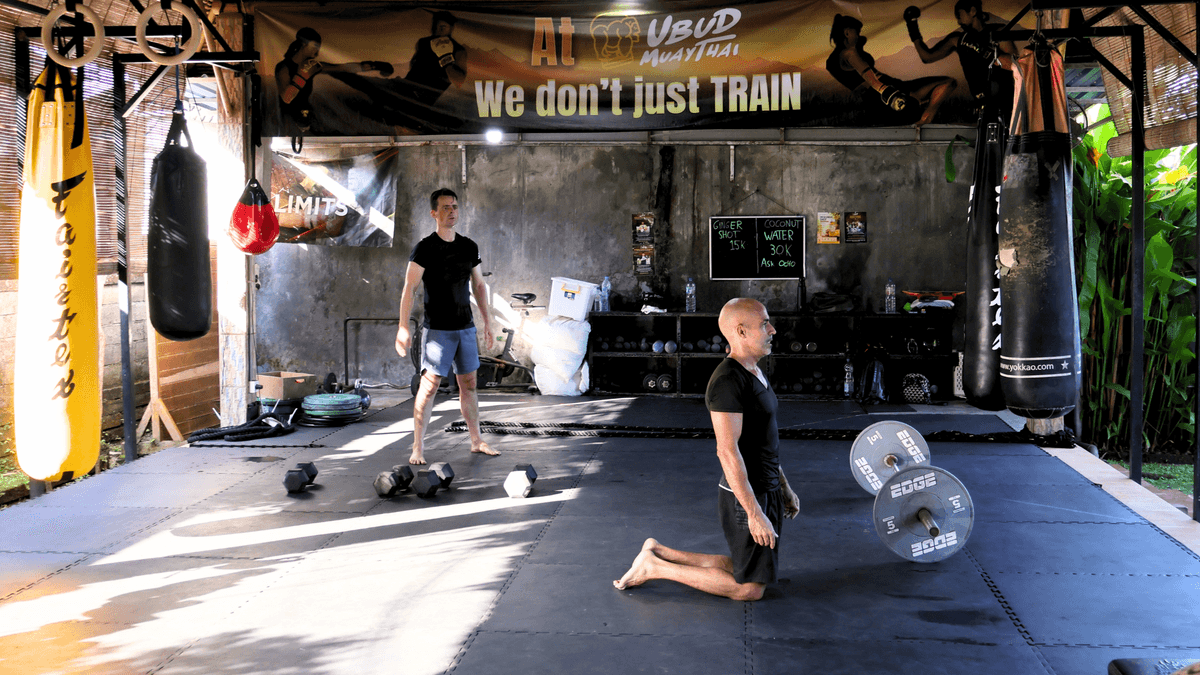
Active recovery days are easier when you have somewhere relaxed to do light, self-paced work. If you'd like to get in for an easy mobility or low-intensity session on your own schedule, Ubud Muay Thai's Open Gym and space-rental options give you the flexibility to train light at your own pace — handy on the days a full class is more than your body needs.
Train Hard, Recover Harder
The athletes who last — and keep improving — aren't the ones who train the hardest every single day. They're the ones who recover the smartest. Prioritise your sleep, use active rest to stay loose, stretch on your off days, fuel and hydrate well, and listen when your body asks for a break. Do that consistently, and you'll train harder, stay healthier, and progress for years instead of burning out in months.
Sleep, stretch, repeat — it's not the flashy part of being a fighter, but it's the part that makes all the rest possible.