

It's the most skipped part of training and the most important: the warm-up. Walk into any gym, and you'll see people rushing straight to the bag or the pads with cold muscles and stiff joints — then wondering why they pull something or feel flat. A proper pre-training warm-up takes ten minutes, dramatically lowers your injury risk, and makes everything you do afterward sharper and stronger.
This guide covers why the warm-up matters, the right way to do it, and a set of mobility drills tailored to the demands of Muay Thai.
Why a Proper Warm-Up Matters
A warm-up does exactly what the name says — it raises your body temperature and gets blood flowing to your muscles. But it does much more than that. A good warm-up:
- Prepares your joints and connective tissue for the loads of kicking, punching, and clinching.
- Wakes up your nervous system so your timing, reactions, and power are switched on from the first round.
- Increases your range of motion, which is critical for high kicks and explosive movement.
- Reduces injury risk — cold, tight muscles strain far more easily than warm, mobile ones.
Injury prevention starts before you even throw your first strike. For the bigger picture on staying healthy in training, our guide on how to avoid and prevent common Muay Thai injuries is well worth a read alongside this one.
Dynamic vs Static Stretching: Get the Order Right
This is the single most common warm-up mistake: stretching cold. Static stretching (holding a stretch for 20–30 seconds) is best saved for after training, when your muscles are warm — done cold, it can actually reduce power and leave you feeling loose in a bad way.
Before training, you want dynamic stretching — controlled, active movements that take your joints through their range while raising your heart rate. Think leg swings, arm circles, and lunges with rotation, not sit-and-reach holds.
A Simple Framework: Raise, Mobilise, Activate, Potentiate
A reliable way to structure any warm-up:
- Raise — light cardio to lift your heart rate and temperature (skipping, jogging, shadowboxing).
- Mobilise — take your key joints through their full range with dynamic drills.
- Activate — switch on the muscles you'll rely on (glutes, core, shoulders).
- Potentiate — a few sharp, sport-specific movements to prime your power (light kicks, fast hands).
Run through those four phases, and you'll step into training genuinely ready, not just less cold.
Mobility Drills for Muay Thai
These are the areas Muay Thai demands the most from. Spend the most time on your hips — they drive almost everything.
Hips and Legs
Your hips power your kicks, knees, and checks, so mobile hips are non-negotiable. Work in leg swings (front-to-back and side-to-side), deep bodyweight squats, hip circles, and walking lunges with a torso twist. For a full set of targeted drills, follow our dedicated guide to hip mobility exercises for Muay Thai. And because mobility and strength work together, pairing these with Muay Thai leg exercises will build legs that are both supple and powerful.
Shoulders and Arms
Punching and clinching demand healthy shoulders. Use arm circles (small to large, both directions), shoulder rolls, and cross-body arm swings to loosen the joint before you throw anything hard.
Ankles and Knees
Your ankles absorb landings, pivots, and checks. Roll through ankle circles and gentle calf raises, and do a few controlled knee circles and bodyweight squats to lubricate the joints before loading them.
Spine, Neck, and Core
Rotation drives your power and protects you in the clinch. Add standing trunk twists, cat-cow spinal movements, and slow, controlled neck rotations. Finish with a couple of core activation moves to brace your midsection.
A Sample 10-Minute Muay Thai Warm-Up
- 2 minutes light skipping or jogging on the spot (Raise)
- 1 minute arm circles and shoulder rolls
- 1 minute leg swings, both directions, each leg (Mobilise)
- 1 minute walking lunges with a twist
- 1 minute deep squats and hip circles
- 1 minute trunk twists and cat-cow
- 1 minute ankle and knee circles
- 2 minutes light shadowboxing with relaxed kicks, building up speed (Potentiate)
Adjust the timing to your needs, but never skip straight to full-power work.
Common Warm-Up Mistakes to Avoid
- Skipping it entirely because you're short on time — the fastest route to an avoidable injury.
- Static stretching while cold reduces power and offers little protection.
- Rushing through it, treating the warm-up as a box to tick rather than real preparation.
- Going too hard, too soon — the warm-up should build gradually, not gas you out.
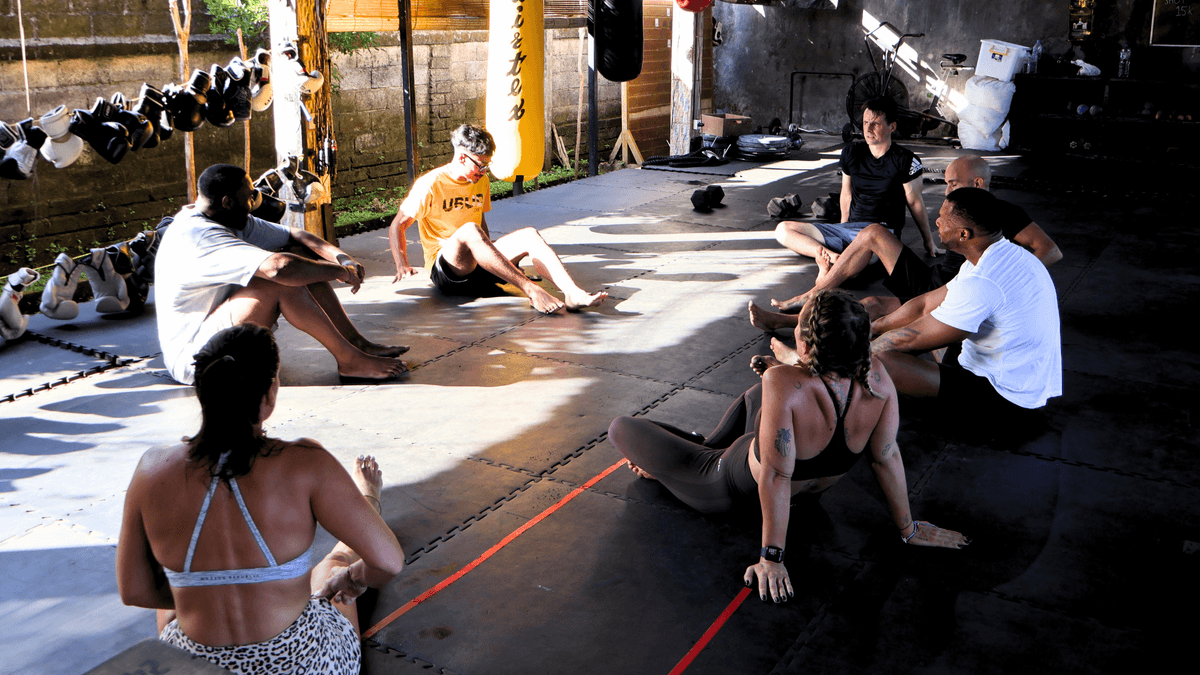
Don't Forget the Cool-Down
The warm-up's partner is the cool-down. After training, that's when static stretching shines — it helps your muscles recover, maintains flexibility, and reduces next-day stiffness. A few minutes of easy movement and held stretches will pay off session after session.
Ten Minutes That Protect Years of Training
A consistent warm-up is the cheapest insurance you'll ever buy as a fighter. Ten focused minutes of dynamic mobility protect your joints, sharpen your performance, and keep you training week after week without setbacks. Make it a non-negotiable part of every session.
Ready to put it to use? Check the Ubud Muay Thai schedule, pick your sessions, and arrive ten minutes early to warm up properly — your body will thank you for years.