

Technique separates fighters who look good on the bag from fighters who actually land clean in live exchange. Here's a deeper look at the striking fundamentals worth mastering, and where most students go wrong.
Punching Fundamentals: Jab vs Cross
Every combination in striking traces back to these two punches, yet most beginners treat them as interchangeable rather than understanding what each one is actually for. The jab sets range, disrupts rhythm, and sets up everything that follows, while the cross carries the real power behind a straight punch. Understanding how these two punches shape your entire striking game changes how you build combinations from the ground up, rather than throwing both punches with the same intent and wondering why neither lands cleanly.
The mistake most students make with the jab specifically is treating it as a throwaway punch — something thrown loosely just to close distance before the "real" strike. Trainers who emphasize jab quality early tend to produce students with far better range control later on, simply because a sharp, well-timed jab does most of the defensive and setup work that heavier strikes rely on to land cleanly.
Kicking Power and Accuracy
Kicks generate more visible power than punches, but that power is useless without accuracy and setup. Checking an incoming leg kick correctly is one of the most misunderstood defensive skills in the sport — a closer look at how to check a leg kick properly breaks down the angle and timing that actually absorbs the impact rather than leaving your shin exposed to unnecessary bruising.
On the offensive side, real knockout power in kicks comes from mechanics, not just swinging harder. Understanding how knockout power is actually generated reveals that hip rotation and follow-through matter more than raw leg strength, which is why smaller fighters can still carry serious power once the mechanics are correct. The roundhouse kick specifically rewards this kind of technical precision — a step-by-step breakdown of throwing a powerful roundhouse covers the pivot, hip turnover, and follow-through that separate a kick that lands clean from one that gets checked or caught.
Head kicks deserve special attention here, since they're the technique most students attempt too early and miss most often. Understanding why most fighters miss head kicks usually comes down to skipping the setup entirely — throwing a head kick cold, without first drawing the opponent's guard down or disguising the shot within a combination, is exactly why it gets caught or blocked so often even by students with otherwise solid kicking mechanics. A head kick thrown in isolation, no matter how technically clean, telegraphs itself the moment the hips begin to open, which is why setups matter as much as the kick itself.
Clinch Control
The clinch is where technical understanding matters more than raw strength, and it's also where a lot of students plateau because the skill doesn't translate visually the way striking does. Several common habits quietly undermine clinch control before a student even realizes it's happening — a closer look at the clinch mistakes killing your control covers the postural and hand-fighting errors that let opponents escape or reverse position without much effort.
Position matters as much as grip strength here. Understanding the different clinch positions and what each one enables — inside control, over-under, double collar tie — gives you a framework for what to attempt next rather than clinching reactively and hoping something opens up. For students newer to this range entirely, a beginner-focused breakdown of clinch drilling strips away the chaos that usually makes clinch work feel overwhelming on a first attempt, focusing instead on the specific grips and reactions worth drilling before adding resistance.
What makes clinch work genuinely difficult to self-teach is that so much of it depends on feel — pressure, timing, and reading an opponent's balance through contact rather than sight. This is one area where repeated live drilling with a partner matters far more than solo practice ever could, since there's simply no way to simulate resistance and counter-pressure without another body actually applying it.
Boxing-Specific Technique Worth Isolating
Several boxing-derived movements deserve dedicated attention rather than getting folded into general striking practice. Footwork built around the pendulum step adds a timing element that straight-line movement doesn't provide — breaking down the pendulum step shows how this subtle bounce disguises when you're about to close distance or reset it. Defensively, the shoulder roll offers a way to deflect punches using rotation rather than retreating, though it takes real repetition before it becomes instinctive under pressure rather than something you're consciously thinking through mid-exchange.
For fighters comfortable switching stances mid-exchange, understanding what makes an effective switch hitter opens up angles that orthodox-only or southpaw-only fighters never get access to, though it requires drilling both stances seriously rather than treating the switch as a gimmick. Southpaws specifically carry structural advantages against the more common orthodox matchup, and studying what makes elite southpaw boxers so difficult to read reveals patterns worth borrowing regardless of which stance you fight from natively.
None of this technical work matters without the reaction speed to apply it live. Structured reaction drills build the split-second recognition that separates fighters who can execute technique in isolation from those who can actually pull it off against a moving, unpredictable opponent. Reaction speed itself is trainable in the same way strength or flexibility is — it doesn't arrive automatically with more sparring rounds; it improves specifically when isolated and drilled on its own, which is exactly why dedicated reaction work belongs in a training week alongside technique and conditioning rather than being left to develop passively.
Technique or Conditioning: What Actually Matters More
It's a common debate among students trying to prioritize their limited training time, and the honest answer isn't as one-sided as either camp usually claims. A closer look at technique versus conditioning and what actually matters more makes the case that the relationship is more interdependent than competitive — poor conditioning breaks down good technique under fatigue, while excellent conditioning without technique just means gassing out slower while still getting outstruck.
This tension also shows up in how Muay Thai and kickboxing compare once you're actually training rather than just reading about the differences on paper. What genuinely changes once you start training and what you actually notice after your first few classes both cover the same underlying truth from different angles: the technical overlap between the two disciplines is much larger in the first few months than most beginners expect, and the real divergence only becomes obvious once elbows, knees, and clinch enter the picture. Students who've trained both consistently note that footwork, guard discipline, and hand technique transfer almost entirely between the two, which means time spent refining fundamentals in either discipline rarely goes to waste even if you eventually specialize.
Knowing the Rules Sharpens Technique Too
Technical mastery isn't just about offense and defense in a vacuum — understanding how fights are actually scored shapes which techniques are worth prioritizing in the first place. A full breakdown of how Muay Thai scoring and fouls actually work explains why certain techniques carry more scoring weight than others, and why some students develop technically sound habits that simply don't translate to how judges are trained to score a fight.
Building Technique That Holds Up Under Pressure
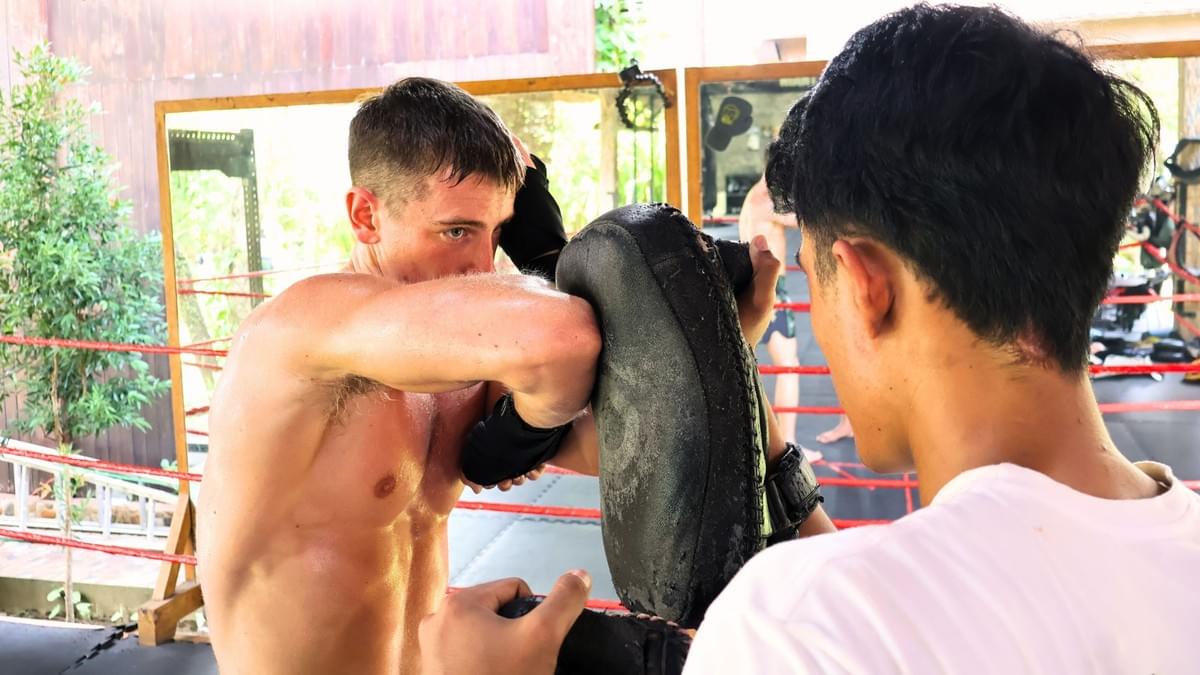
The through-line across every one of these techniques is the same: mechanics that look correct in isolation only matter once they hold up against resistance, fatigue, and an opponent who isn't cooperating. Drilling in isolation builds the pattern, but it's live application — pad work, clinch sparring, controlled sparring rounds — that reveals whether the technique actually works or just looks right in a mirror. Students who progress fastest tend to be the ones who treat every isolated drill as a step toward that live test, rather than an end in itself.
If you want a trainer's eye on any of the technique covered here, you can check the schedule and book a class to get direct feedback on where your own mechanics need work — the kind of correction that's genuinely difficult to get from video alone.